

Koll på kölen?
Kraven för att få kappsegla på havet fortsätter att öka, trots att antalet tillbud är relativt få.
Det senaste kravet är infästningen av köl och roder måste kontrolleras vartannat år.
Så här är det formulerat i senaste upplagan av säkerhetsreglerna.
Effective 1 January 2022: Structural Inspection – Consult the owner’s manual for any instructions for keel bolt checking and re-tightening. The following inspection to be conducted by a qualified person externally with the boat out of the water. Check that there are no visible stress cracks particularly around the keel, hull/keel attachment, hull appendages and other stress points, inside the hull, backing plates, bolting arrangements and keel floors. (See Appendix L Model Keel and Rudder Inspection Procedure).
Effective 1 January 2022: Evidence of a structural inspection in accordance with 3.02.2 within 24 months before the start of the race or after a grounding whichever is the later.
Effective 1 January 2022: Inspection after Grounding – an appropriately qualified person shall conduct an internal and external inspection after each unintentional grounding.
Så klart har ingen funderat på hur detta är tänkt att fungera i verkligheten, vem som är kvalificerad att göra inspektionen och hur det fungerar mellan olika länder. Det skall också bli spännande att se om övernitiska besiktingsmän skall börja lyfta på durkarna framöver?
Idag kom SSF med sina riktlinjer.
Nya krav på besiktning för havskappseglare
17 JAN 2022 14:40
Denna information rör de båtägare som vill delta på kappseglingar i Sverige som tillämpar World Sailings Offshore Special Regulations kategori 3 som exempelvis Gotland runt eller Raymarine2Star.
Från och med 1:a Januari 2022 kräver OSR 3.02 att en okulär besiktning av kölinfästning inklusive kölbultar och roder med tillhörande styrsystem genomförs minst vartannat år och alltid efter en grundstötning. Besiktningen skall dokumenteras och kunna visas upp för arrangören vid registrering.
Svenska Seglarförbundets styrelse har efter förslag från Tekniska kommittén beslutat att:
- SSF kommer att tillhandahålla ett webbaserat register över genomförda inspektioner där båtägaren kan ladda upp dokumentation och bilder från en genomförd inspektion och där arrangörer kan se vilka båtar som har genomfört inspektionen. För båtar som har mätbrev utfärdade av SSF kommer det vara kostnadsfritt att använda registret. Systemet väntas vara i drift senast 1:a april.
- För seglingar i Sverige får båtägaren själv genomföra inspektionen med hjälp av den mall som TK utarbetat. Om båtägaren så önskar får man anlita hjälp av en kvalificerad person tex. en besiktningsman, båtbyggare från ett varv eller annan kvalificerad person.
- Mätpersoner licenserade av SSF är generellt inte att anse som kvalificerade personer och förväntas inte utföra stukturinspektioner.
Båtar som skall kappsegla utomlands kan behöva en besiktning av en oberoende kvalificerad person. Uppstår ett sådant behov kommer SSF att försöka hjälpa till att förmedla kontakt med lämpliga personer.
SSF undersöker även möjligheten att koordinera kraven för strukturinspektioner med vår grannländer. Vidare information om detta kommer förhoppningsvis under våren.
Dokument att ladda ner:
Protokoll för besiktning av kölinfästning (pdf)
Instruktion för besiktning av kölinfästning & roder (pdf)
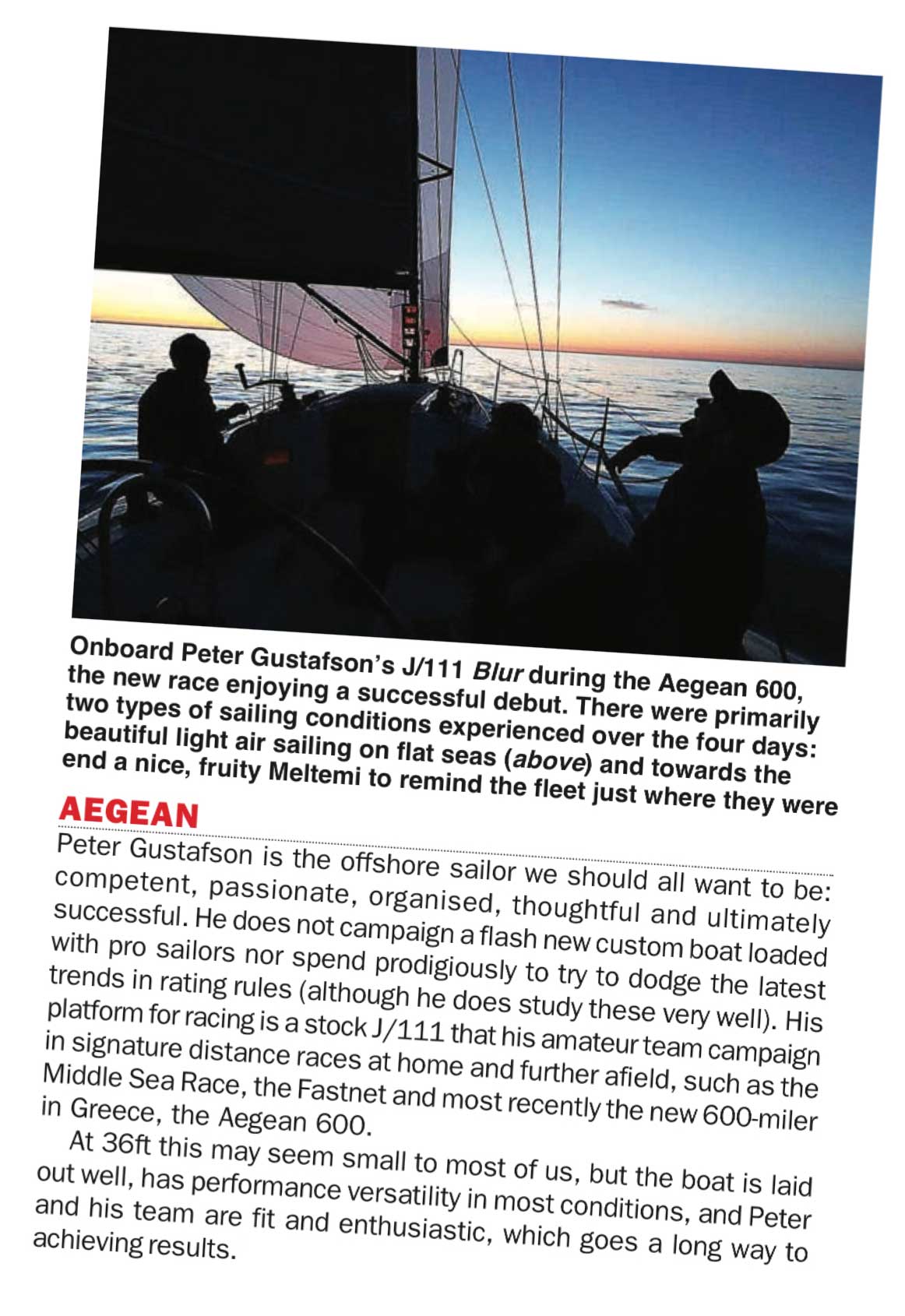
Blur i Seahorse
Amerikaner är ju kända för att ta i, så man får ta det Dobbs Davis skriver i Seahorse med en nypa salt… Men det känns ändå kul att vårt team får beröm.
Peter Gustafson is the offshore sailor we should all want to be: competent, passionate, organized, thoughtful and ultimately successful. He does not campaign a flash new custom boat loaded with pro sailors nor spend prodigiously to try to dodge the latest trends in rating rules (although he does study these very well). His platform for racing is a stock J/111 that his amateur team campaign in signature distance races at home and further afield, such as the Middle Sea Race, the Fastnet and most recently the new 600-miler in Greece, the Aegean 600.
At 36ft this may seem small to most of us, but the J/111 is laid out well, has performance versatility in most conditions, and Peter and his team are fit and enthusiastic, which goes a long way to achieving results. You get the sense Peter and his team have come to rational choices on almost everything they do, and to race a larger boat would only lead to exponentially more hassle and expense.
Peter is also proficient at communication and sharing his observations on the sport. His online blog, BLUR.SE, informs and entertains in simple, direct reviews of his own team’s exploits on his J/111 of the same name, but also looks at other topics in the racing world.
Blur is an aesthetically pleasing presentation of material that is easy to read, review and enjoy, and is devoid of distracting ads, solicitations, shouting or profanity from unruly readers. There are links to other media outlets, but it’s all packaged in a way that even us fossils can follow without feeling like we need to engage, unless we feel inspired to contribute something positive and not just rant.
Oh, and here’s the other thing: Peter is from Gothenburg and his blog is in Swedish with some English. And, he routinely helps organize large, inclusive, fun races on the Swedish west coast, like the Marstrand Big Boat Race and Midsummer Solo Challenge.
Understandably, Blur is thus immensely popular Scandinavia – from Denmark to Finland. But, I bet has plenty of fans elsewhere because the topics are relevant to the core of our sport: amateur big boat sailors who are at high degrees of interest and competency and are keen for the game while still having a real job and a proper life.
Some of us pundits have forgotten how cool and important this sector is — which is why it was a great pleasure sitting down with Peter at the Olympic Marina in Lavrio, Greece, venue for the latest new 600-miler. They had done well in a race that delivered all manner of challenges: a relatively light first half that had them vying boat for boat with rivals 10ft longer, learning how to get around the numerous corners of a very interesting course, pulling up to within striking distance of the overall lead in corrected time, and then seeing that slip away when the race’s second half featured a 25-40kt Meltemi where on a long reach the larger boats powered off into the distance.”
“We spent a lot of time preparing for this race, researching the weather, examining our rating and polars to bring the right sailplan, running scenarios,” Peter said. “We also learned from our Middle Sea Race experience it is better to stack the boat with capable crew, but rotate them regularly to keep everyone fresh. So, we sail with nine, which is more than the buoy racers, but this seems to be a magic number to keep our boat going at 100 per cent all the time.”
This is an example of a rational decision based on logic and experience rather than the norm which would dictate going with a reduced crew so as not to be dragging more weight… which may be true for a predominant downwind race like Transpac, but not these 600-milers, where there can be a lot of beating and reaching when the weight is needed.
The Blur team delivered their boat to Greece weeks earlier from Malta, where they last competed in the Middle Sea Race in October 2019 — scoring an impressive class win in ORC 4 and third overall in ORC, while earning third in IRC Class 5. Eighteen months on they were hungry to get back into action.
“We got here in plenty of time to re-commission the boat, then complete our crew practice and sail-testing well in advance,” Peter said. “The weather was being monitored and modeled days in advance, so when it was time to start, the team were relaxed, ready, and in a state of confidence that few amateur teams experience as they scramble to make the start.”
The approach paid off again. In Greece they scored a win in ORC Division 2, second overall, and second in IRC 2, fourth overall, with only much bigger boats ahead of them in the standings.
“This was not an easy race,” Peter said of their Odyssey around the Aegean. “But, it was immensely satisfying because of the constant shifting gears. This is a suitable test for any good offshore team, because all the skillsets are needed; it’s not straightforward, especially at the corners! In one minute, you’re double-reefed with a storm jib, then the wind drops 10kt and you rush to shake out the reefs… only to need them again a few minutes later!!”

L4 Trifork redo för RORC Transatlantic Race
Fick lite snygga bilder och en drönarfilm från Søren Wiegand.
L4 Trifork är ju sä nära en Skandinavisk båt vi kommer med Boule Bekking, Jens Dolmer, Søren Kristensen, Joe Larsen, Aksel Magdahl, Juan Pablo Macos Totto, Klaes Meier-Andersen, Stefano Nova, Simbad Quiroga och Joca Signorini.
Båten är ju gamla Ericsson 4, med nya foils, lättad och med längre peke.
It’s great to be back to Lanzarote and Marina Puerto Calero!
We had a short practice day today to check up the boats systems and some sails in the Trifork. It was another classic windy day out there with 22 to 27 kts and big waves. Great memories of the many practice days we had out there with the Ericsson team.
We are looking forward for the Transatlantic on the Trifork, which has been up graded with some foils, longer bowsprit and different ballast configuration compared to the VO70 rules. The boat is also lighter with a new keel fin.
We are very much looking forward for the race!!Cheers
Joca Signorini
Watch captain Trifork


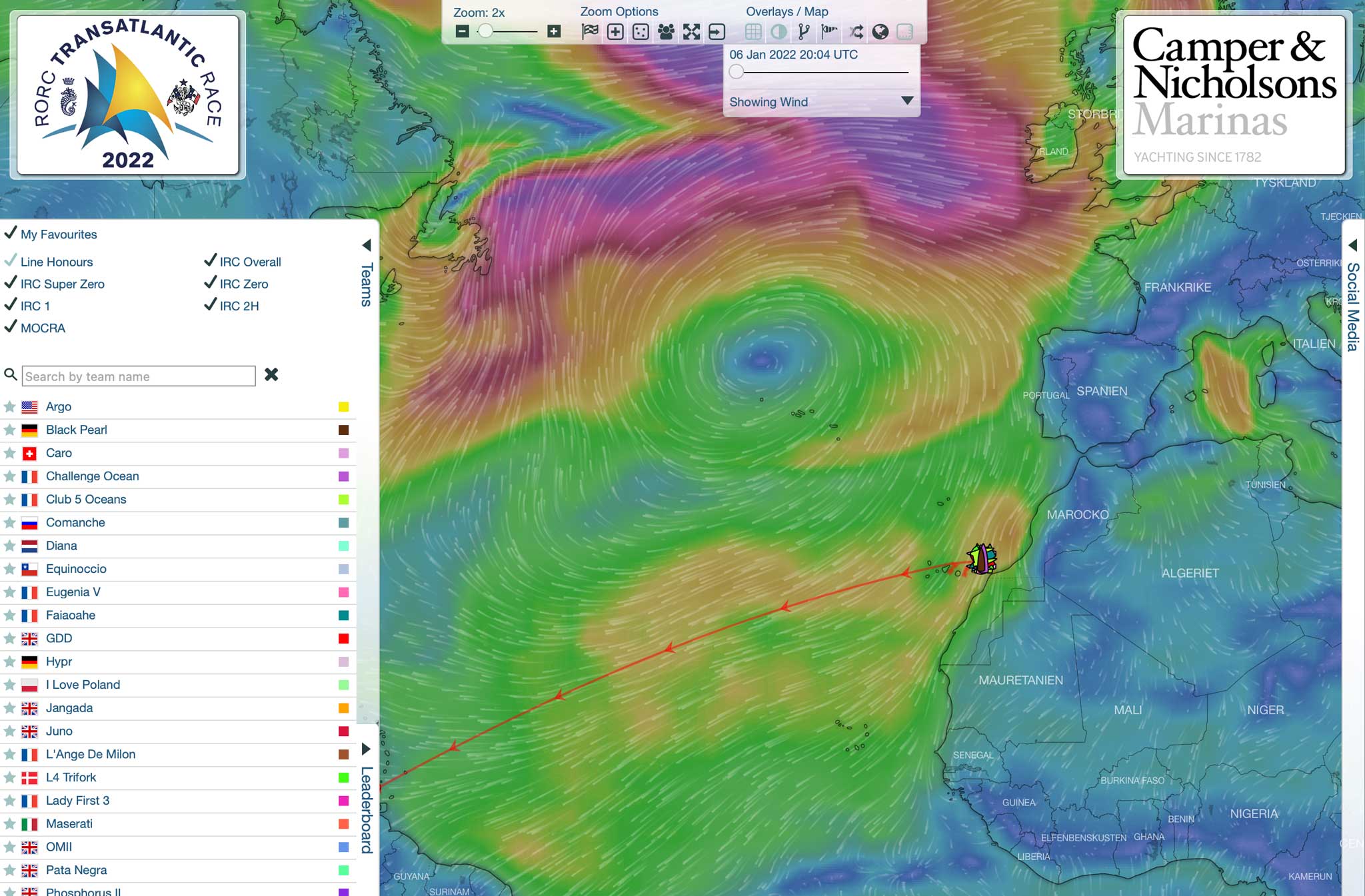
RORC Transatlantic Race | Trash talk
På lördag är det dags för 8.e upplagan av RORC Transatlantic Race.
Vi hade ju hoppats på att få se Elliot 44 Matador på startlinjen, men så blev det inte.
Starten skall sändas live här och så finns det så klart en tracker.
Att Comance är först i mål av enskrovsbåtarna är givet, men det finns några andra fighter som är extra roliga:
- MOD 70 med Powerplay, Argo och Maserati.
- VO70 med Trifork, Hypr och I Love Poland.
- Nya bräckliga IRC-racers där vi ser helt nya Botin 52 Caro och där Botin 56 Black Perl gör nytt försök (man hade sönder peket förra året).

Personligen har jag lite extra koll på JPK 1010 Jangada som vann totalt här om årets trots att man kör doublehanded. De körde ju Middle Sea Race också. Det gjorde också J/122e Juno som var i vår klass.
Här är RORCs egna tips.
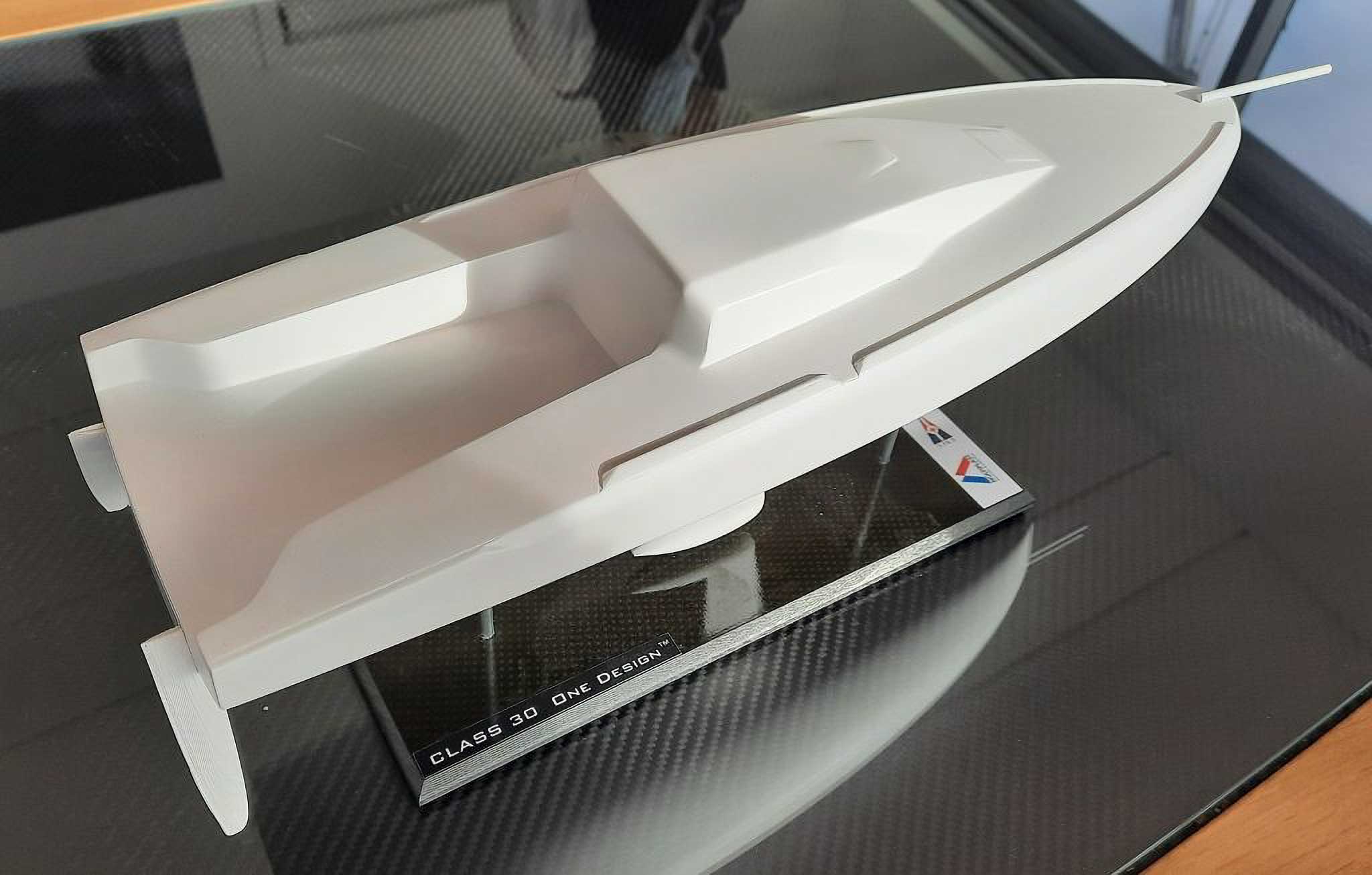
Sweet… Class 30 One Design
Shorthandedbåtar kring 30 fot är ju ett stekhett segment med Figaro 3, Dehler 30, SunFast 3300, J/99, JPK, Farr X2 och ett antal andra. Här behövs inga nya designer.
Men när Franska offshoreförbunder (UNCL), RORC och Storm Trysail Club ber VPLP rita nåt så måste man ju sitta upp och anteckna. Framförallt lär man kunna få till en riktigt bra serie.
Spännande!
Class 30 One Design™: Reservations are open!
With the preliminary design study phase drawing to a close, the ground is now being prepared for the construction of the first Class 30, with the next phase of the project underway, which is the development of the detailed construction plans. These will be completed by the end of March 2022.
The new Class 30 design will offer two different specifications; a Club and One Design version, with the Club offering being seen as a tool for training, learning about and competing on the offshore racing circuit. This new boat is the fruits of an international architecture competition organised by France’s National Offshore Racing Union (UNCL) in partnership with the Royal Ocean Racing Club (RORC), in the UK and the Storm Trysail Club in America. With the constant involvement of the competition winners, the VPLP naval architecture firm and the Multiplast yard.
One of the objectives of the project is for the Class 30 Club boat, to have a competitive ready to sail price tag of under €100,000.
A promising start and the prebooking process
At this early stage of the programme, the project has been very well received with over thirty reservations of production boat numbers recorded on the UNCL – Yacht Club de France stand at the Nautic boat show in Paris, where the launch process began in earnest together with the presentation of the model.
The registration protocol is both simple and safe. You need to send an email to class30@uncl.com where all requests are received; in return a booking contract will be sent along with a short presentation on the boat. To secure the reservation a €2,500 deposit needs to be paid to a locked escrow account (all details in the information you receive), managed by a sworn lawyer. Once funds are received, the lawyer sends a booking number in chronological order to applicants. This booking number is non-transferable and you can cancel your reservation at any time and receive a full refund.
Production set to commence from January 2023
With regards to the build schedule, the study phase has been extended to finalise the tooling and moulds so that construction of the production boats can commence at the beginning of 2023, with the aim of having a few of the boats competing that Easter, either at the Spi Ouest France or the SNIM, or at RORC races in UK.
Depending how the order book evolves, promoters of the production boat will consider in due course whether or not to put in place an additional mould to increase production capacity in France, whilst evaluating the development of a licence programme overseas.
A boat designed to be container-shipped
In addition to the very contemporary lines and a series of simple and inexpensive solutions, what has come off the drawing board of competition winner VPLP-Multiplast is a truly stellar logistical feat. Indeed, through the possibility of fitting the whole boat and its rig into a 40-foot container was not a prerequisite of the initial specifications, it was quickly viewed as a major benefit in ensuring the best possible distribution of the one-design via both road and sea transport. The design of a transport cradle is also envisaged with this in mind. In line with the wishes of the project’s stakeholders, particular attention has gone into the pre-manufacture studies of the first prototype to ensure the best possible control of the budget for the production boats, which is a key aspect of the project.
A circuit for the Class 30 One Design™
The main aim of the class is to set up a sports programme enabling sailors – owners and clubs – to get out racing at the highest level as soon as possible on a variety of course types and stretches of water. To this end, the one-design is intended to provide an optimised response to the IRC measurement criteria. This option will pave the way for an extensive one-design race programme both in France, UK and overseas, around the cans and offshore. UNCL and RORC are also very keen to quickly schedule in a ‘Class 30 Tour’, an event which will serve as a reminder of the project’s suitability and ambition for training and replenishing a whole generation of offshore racing crew and skippers of renown. This Class 30 Tour could travel with crews going back and forth between the English and French coasts.
Class Management
It is the intention to set-up class associations for both the Club and One Design to develop and manage the Class 30 (rules and racing programme), as well as being a forum for sharing ideas, training initiatives and managing and dealing with any issues that are relevant to the class.
Quotes:
James Neville, Commodore of the RORC
“Beyond the political wrangling, we’re here to prove that in the sailing world, we know how to support joint projects and get the French and the English working together as one!”
Géry Trentesaux, new President of the UNCL
“We are extremely pleased with the progress of the Class 30 One Design™ project. One of our priorities is to ensure its success, and we are particularly happy with the involvement and motivation of the team formed by the naval architect firm/yard. As Yves Ginoux said, we’ve successfully rounded the first upwind mark and we’re now focused on running before the wind, ready to make the most of the favourable gusts.”
Simon Watin, VPLP design
“Managing to combine performance, simplicity and fun with this boat, which aims to connect dinghy sailing and offshore racing, is an extremely motivating challenge for our whole team. Following on from our fine experience on the Figaro 3, it’s another step forward into the world of production monohulls for us.”
Dominique Dubois, Multiplast Groupe Carboman
“We’re very proud to have been selected to build this new one-design. For Multiplast, the race is already on and we’re investing a great deal of energy into this project to ensure the boat is accessible and easy to maintain, whilst also being quick and fun. It’s an ambitious challenge and just the kind of project we love taking on.”
Reminder
Class 30 Club: a basic version that is simplified yet high-performance, for training offshore racing crew and one-design racing at a particularly competitive ready-to-sail introductory price enabling it to be purchased by as many people as possible.
Class 30 One Design™: Club version to which kit integrating various fit-out modules has been added (electronics, navigation and galley modules, ballast tanks…), designed to expand its scope of use and performance for offshore racing. The Class 30 One Design version enables a duo or crew to race in a one-design class as well as be competitive in IRC.
Key points of the Class 30 One Design™ project:
– A boat that is great to sail: seated comfortably at the helm or out on the rail, on a hull which is not too wet, with a large cockpit for carrying out manoeuvres in crewed format
– A design which keeps a tight rein on cost:
Simple forms with minimal developed surface area
A structure and assembly geared around the production of a one-design series
A pared-back deck layout and rig
– Significant focus on eco-design, with the overall consideration of the construction as well as the uses and manner of sailing
– A powerful and versatile hull for a boat which is evolutionary on every point of sail
– A light, effective and accessible deck layout to prioritise dynamic trimming and favour learning within crewed sailing.
For more information contact: