Till helgen avgörs Sveriges största SM i kölbåt. Man har vänt den nedåptgående trenden (56-36-30-26 båtar 2010-2013) med 57 båtar i startlistan. Av dessa är 35 svenska.
Det stora internationella intresset är spännande. I Norge är klassen glödhet och man samlar 30 båtar på kvällsseglingarna i Oslo. Där ser man vilken effekt en kung kan ha… Men det vimlar av bra seglare och man har fått massor av träning i tajta fält. Får vi se några norrmän på pallen? Vem har koll på vilka som är bäst?
Även danskarna är bättre än sitt rykte. De svenskar som åkte dit förra året trodde att det skulle vara lätt. Men det var det inte…
Vilka är favoriter då?
Collis/Ålby, speciellt om det blåser på fjorden. Vann de senast? Fast Collis klagar på både kroppen och båten så man vet inte. SWE 305 Skumpan med Ronny Gustavsson ‘är regerande mästare, men är tydligen oroade för den omtalade sjön utanför Marstrandsön. Verkar vara fler som är det?
SWE 619 Edman, SWE 2002 Reerslev, SWE 2010 Arne K och SWE 2015 Henri Lloyds Salingteam är alltid i topp
SWE 003 Björn Österberg har varit nära nära många gånger nu. En hel hög med 2:or och 3:or borde väl någon gång utmynna i en seger?
Sedan finns det en del duktiga seglare som inte brukar hänga i Expressen. Jonas Berntsson från Stenungsund t.ex. Kan han sticka upp? Några andra?
Är det så att nya båtar är snabbare?
Och blir det något bra kalas?
DEN 115 Explorer Søren Juel Ballen Sejlklub
DEN 225 quickstep morten arndal horsens sejlklub
DEN 271 Ilskov & partnere Hans Christian Erbs SNV
DEN 654 eXceed Jesper Nørbo Sørensen Sejlklubben Neptun Vejle
DEN 2011 EPIserver Kim Lago Nørgaard Horsens Sejlklub
GER 257 Gemma Xpress Marwin Outzen Flensburger-Segelclub (FSC)
GER 786 Ticaranto Andreas Pinnow SVK
GER 1014 Fräulein P. Jan Brink Flensburger Segelclub FSC
NOR 117 Hex Press Frank Huth Stavanger Seilforenin
NOR 147 Sånnja Arild Holt Oslo Seilforening
NOR 150 Hvergang Team Hvergang Oslo Seilforening
NOR 207 Patagonia Fredrik Thafvelin KNS
NOR 413 FriiStilt Noch Einmal Mathias Friis OS
NOR 430 Krahn-Eriksen Finn Eriksen Drøbaksund Seilforening
NOR 755 Judas Erik Holter Færder SF
NOR 819 Air Flow One Richard Karlsen Kongelig Norsk Seilforening
NOR 1066 Mandrill Siri B Kamfjord Tønsberg SF
NOR 1121 Den 2ndre Xdama Trond Sverre Førde Bundefjorden seilforening
NOR 2006 impuls Morten Aagaard Bundefjorden
NOR 2007 Glory Geir Victor Svendsen Oslo Seilforening
NOR 2013 Y-Not Øystein Fuglesang Soon
NOR 2014 Tassen Even Larsen Soon
SWE 39 Windy Mattias Allroth MSS
SWE 130 lakrits Calle Nilsson GKSS
SWE 272 Båtaccenten Youngsters Didrik Dahlström SSS
SWE 284 Snövit Ingmar Carlsson Linköping SS
SWE 305 Skumpan Ronny Gustavsson LSS
SWE 329 Tvålen Petter Conradsson Umeå Segelsällskap
SWE 329 yourself Hans Eckerström GKSS
SWE 347 Octopus Jörgen Åkesson Träslövsläges Båtklubb
SWE 349 AgnesX Lars de Vahl Karlstad Segelsällskap
SWE 356 Red Rocket Felix Mossberg Hjuviks Båtklubb
SWE 371 Joakim Kling StSS
SWE 417 Tung VIII Björn B Gustavsson SegelSällskapet Gäddviken
SWE 451 Solskensgossarna Richard Gustring Arkens Båt Sällskap
SWE 468 Kokaburra Max Koszela KSSS
SWE 528 Hallberg & Co Staffan Hallberg KSSS
SWE 529 Speeed Henrik Grotte
SWE 537 Jonas Berntsson STSS
SWE 573 Sixten Olle Heimersson Umeå Segelsällskap
SWE 592 Baboo Mikael Johansson GKSS
SWE 594 HPI Martin Rubing Örnsköldsvik Segelsällskap
SWE 595 Estelle Daniel Stenholm HASS
SWE 619 Sweet Emma henrik edman MSS
SWE 648 Anna Grandinsson GQSS
SWE 712 Qetar Calle Nyström Södertälje BS
SWE 728 Mayne Robert Ångström KSSS
SWE 754 WillyX Mats Borg Norrbyskär YC
SWE 756 Team +400 Jonny Karlsson Fiskeboda båtklubb
SWE 774 Farbror Blå Per Lewander Norrköpings Segelsällskap
SWE 899 Michael Johansson MSK
SWE 2002 Burken Aage Reerslev KSSS
SWE 2003 Duvnäsvikens Marina Björn Österberg KSSS
SWE 2010 regatta.nu Arne K Larssen GKSS
SWE 2012 SVETSBOLAGET Michael Collberg Mariestads Segelklubb
SWE 2015 Henri Lloyd Henri Lloyds Salingteam GKSS
SWE ?? ? Göran Bobeck BOOSS
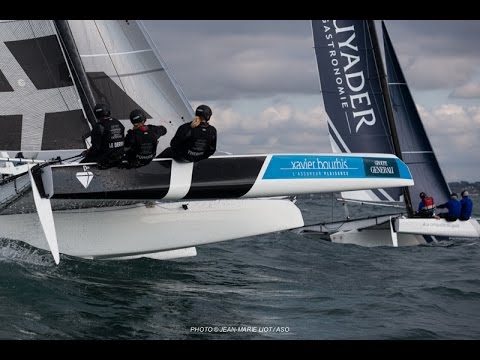
Tour de France à la Voile är ju en institution i Frankrike och en tävling som lockar både amatörer och proffs (det har väl blivit proffsigare med åren). Man har ju också seglar i ganska många olika båttyper, där de flesta av oss kanska minns Farr 30 bäst. Men nu blir det alltså flerskrov med Diam 24.
Diam 24.är en liten sportig trimmis som designats av VPLP. Man har byggt 8 båtar och har redan en liten serie med bland annat Vincent Riou och Bernard Stamm. I Sverige har vi ju sedan tidigare sett Multi 23 som verkar ganska lik och Seacart 26 som väl är snäppet större/tyngre? Båten sägs kosta €55.000 “ready-to-sail”.
Length: 7.25 m
Beam: 5.62 m
Air draft: 12.20 m
Draft: 1.5 m
Displacement 450 Kg
Mainsail: 22m²
Solent 10m²
Gennaker: 32m²
Like the previous boats, the Diam 24 is one-design boat. But the true revolution that A.S.O chose to establish lies in the fact that the Diam 24 is a 7.25m trimaran !
The multihull revolution
After the Ecume de Mer (1978), the First 30 (1979 to 1981), the Rush Royale (1982 and 1983), the Sélection 37 (1984 to 1991), the JOD 35 (1992 to 1998), the Farr 30 (1999 to 2010) and the M34 (2011 to 2014), from next summerm 2105, the Diam 24 will be the new boat of the Tour de France à la Voile,
Like the previous boats, the Diam 24 is one-design boat. But the true revolution that A.S.O chose to establish lies in the fact that the Diam 24 is a 7.25m trimaran ! This sport boat was designed by VPLP and built in Port La Forêt (France) by Vianney Ancelin. Since its launch at the Paris Boat Show in December last year it has already seduced many renowned French sailors.
A circuit has also been created including various events like the Grand Prix Guyader, the Grand Prix de l’Ecole Navale, and the Raid Emeraude in Saint-Lunaire. Michel Desjoyeaux, François Gabart, Vincent Riou and Sidney Gavignet are just some of the the first people who have shown their interest in this multihull.
A controlled budget for easier access to the event
The Tour de France à la Voile needed a new breath of life. For a few months, A.S.O has led a large survey with stakeholders from the sailing industry (skippers, crew members, project managers, institutions, partners…). They had three priorities : firstly, to offer a boat that would make the participation to the event much cheaper. Secondly, to choose a one-design boat which also has a circuit, which means a boat that has a life outside of the Tour de France à la Voile. « We wished to start from a blank page in order to have a maximum of opportunities, without closing any doors. The budget for taking part in the event quickly appeared to be the key point, as well as the desire of many competitors to move to multihull racing, for more speed and more spectacular show on the water. The Diam 24 costs about 55 000 euros ready to sail, which is one third of the cost of the M34, and it entirely fullfils the two objectives. It offers a perfect budget positioning, with the opportunity to attract a large range of teams, from the corinthian to the elite crew. For the top teams, it will be a complementery platform to their main projects, on an event that they enjoy, and that offers their partners great possibilities in multiple places, both on the race village and from an hospitality point of view, the Tour de France à la Voile being, through its format, a summer tour along the french coasts », declared Jean-Baptiste Durier rhis morning in Nice.
Closer from the publicThe Diam 24 is a fun, fast and spectacular boat, and on top of that, it will sail closer to the public. It was one of A.S.O main objectives since they bought the Tour de France à la Voile in 2012. To reinforce the « show » aspect of the Tour de France à la Voile. The idea is to set an itinerary around France, with some iconic places of the French coast, like the « Château du Taureau », in Roscoff, or the island of Porquerolles near Hyères. « We will alternate two types of races in each stop. Some coastal races, on Day 1, that we can adapt depending of the weather conditions, and that will showcase the wonders of our coasts, and some inshore races, on Day 2 on a sailing stadium mode. Our will is the bring the show closer from the shore and from the spectators, and to create an entertainment program on land so that the public can understand what’s going on on the water, with a very well thought out visual and audio background. People like multihull sailing because it can be very spectacular. That’s also what guided our choice », said the director of the Tour de France à la Voile (name ?) The Diam 24 will have 3 or 4 crew onboard and can be lifted out of the water and dismantled in an hour only. From a logistical point of view, it is a perfect format for the Tour.
A mix of top sailors and corinthian sailors, the essence of the Tour de France à la Voile
The teams of the Tour de France à la Voile have welcomed the Diam 24 announcement with enthusiasm. They know this is the opportunity to revive the sporting aspect of the event, following on from the large reorganisation operated on land for the last two years (increase of the Race Village, creation of a set of publicity cars and of an entertainment hub on the beaches). Some key sailing figures who haven’t taken part for many years could consider coming back along the french coasts , like Michel Desjoyeaux, François Gabart, or Vincent Riou, who won everything this year on the Diam 24 circuit. « The future of sailing, in general, is the multihull. I am absolutely sure of that », explained François Gabart. And for Michel Desjoyeaux, « the objective is to have more boats and more sailors on the Tour de France à la Voile. The Diam 24 complies with the necessary flexibility on a mobile event along the French coasts, taking into account the timing priorities for the entertainment on land ! »
The Corinthians are also very intertested by the new series that should keep developing this year. Paul Adam, President of the Ligue Haute Normandie who initiated the Normandy-Acerel M34 campaign, who just won the Corinthian ranking this year, is supporting the Tour’s evolution : « The Tour de France à la Voile needed to be rejunevated. We are heading torwards a more attractive type of sailing, that is also a show for the spectators. The lower financial conditions will encourage the smaller teams to come back to the event ». The new course will be revealed during the Nautic – Paris Boat Show in december, as well as a few competitors already involved for the next edition. The objective is to offer a diverse fleet, gathering various families of sailing, olympic sailors, offshore sailors, professionnal crew members, and corinthian teams. The Tour de France à la Voile is en route towards its future on three hulls !
Quotes from :
Michel Desjoyeaux skipper :
« The Tour is a model in french crew handed sailing. Many young sailors have grown to top level racing and became pro after sailing on the Tour. Multihull sailing is clearly part of the french sailing and technological culture, and now it is finally going international ! It’s great gather the two and revive this major event. The objective is to have more boats and more sailors. The Diam 24 complies with the necessary flexibility on a mobile event along the french coasts, taking into account the timing priorities for the entertainment on land »
Vincent Riou, skipper of the 60’ monohull PRB :
« The Diam 24 is a light and fun sport boat. It’s full-on and it’s going to be a great show. I was looking for another boat on top of my 60 foot monohull. It’s an easy campaign to take on. The Diam 24 series has just started and it already attracts top people. And the Tour de France à la Voile is also an institution. I think the Diam 24 can rejunevate the event. It will be a great campaign to do the Tour on a multihull. I just love the idea ! »
Daniel Souben, skipper of Courrier Dunkerque 3 :
« We are at a time when the Tour has some difficulties despite the level of the competitors and the excellent media cover. We don’t have enough teams. So we can’t refuse the opportunity to rejunevate. The solution they found should allow attract many teams to the event and facilitate the mix of professionnals and corinthians. It will be a different format as we are going to lose the offshore legs. But it will bring some new competitors including a younger generation and some people from the multihull world. The Diam 24 in the Tour is a good thing, from a communication point of view, but also from the budget point of view. It’s definitely worth trying ».
Eric Hainneville, President of the Diam 24 class :
« The introduction of the Diam 24 as the new boat for the Tour de France à la Voile is a bit stressful for me, as a president of the Class. The bar is set high right from the start. We just want to be good enough so that no one is disappointed. As a sailor, it’s a fantastic project. I think it’s a recognition of the multihull as a proper racing platform. Sailing a multihull requires real sailing abilities. The America’s Cup helped a lot in this recognition. With Vianney Ancelin, we wanted a sensationnal boat, for a reasonnable price, simple and easily accessible. It was a real challenge. This boat will attract other types of sailors, both on the pro and on the corinthian side. It will give the Tour de France à la Voile a new dimension. I think it’s fantastic. There is a real mutual trust amongst us, the sailors, the class, and the race organisers ».
Nicolas Honor, project manager of Oman Sail :
« The fact that A.S.O is changing the boat is a good thing. Unfortunately today, the entries are decreasing every year on the Tour de France à la Voile. A.S.O had the courage to do something about it. Regarding Oman Sail, our project is more offshore sailing orientated, but we also have our MOD70 so the Diam 24 could be an interesting platform for us. We can readjust our omani sailors training program. We are more than 50% sure to do the Tour de France à la Voile again next year. But there are still some question marks because the Oman Sail program for next year hasn’t been established yet for the various circuits we are involved in. In brief, if we have an opportunity to do the Tour on a Diam 24, we will take it ».
Sidney Gavignet, skipper of Team Oman Sail :
« Moving to multihull is simply in the mood of our time. This change was necessary. To find a more affordable platform is logical considering the economic situation. I think the competition will be homogeneous. The big teams will prepare like big teams do and then we will have some sailors who don’t come from offshore sailing but from the sport multihull. I trust A.S.O to make the right choices ».
François Gabart, skipper of Macif :
« I did my first Tour in 2002 or 2003 and at the time I was sailing on Tornado. On the Tour I discovered offshore sailing, nightime racing, sailing with the tides and current… But I thought monohulls were a bit slow. AT the time I remember I told myself that it would be great to do it on small multihulls ! Therefore I think the evolution of the Tour de France à la Voile is very positive. And the future of sailing in general is multihulls. I bought a Diam 24 before even knowing it would be the new Tour boat. It’s an excellent boat, very accessible, both from a budget point of view and from a technical aspect. The Tour will be more popular, for the public and for the competitors. The mix has always been the Tour’s strength ! »
Fransmännen har ju en del udda båtar, där funktion går före yta. Och det finns ju en lång histora av att rita båtar som tar sig runt jordklotet… Nu har både Yachting World och Yachting Monthly testat Garcia Exploration 45.
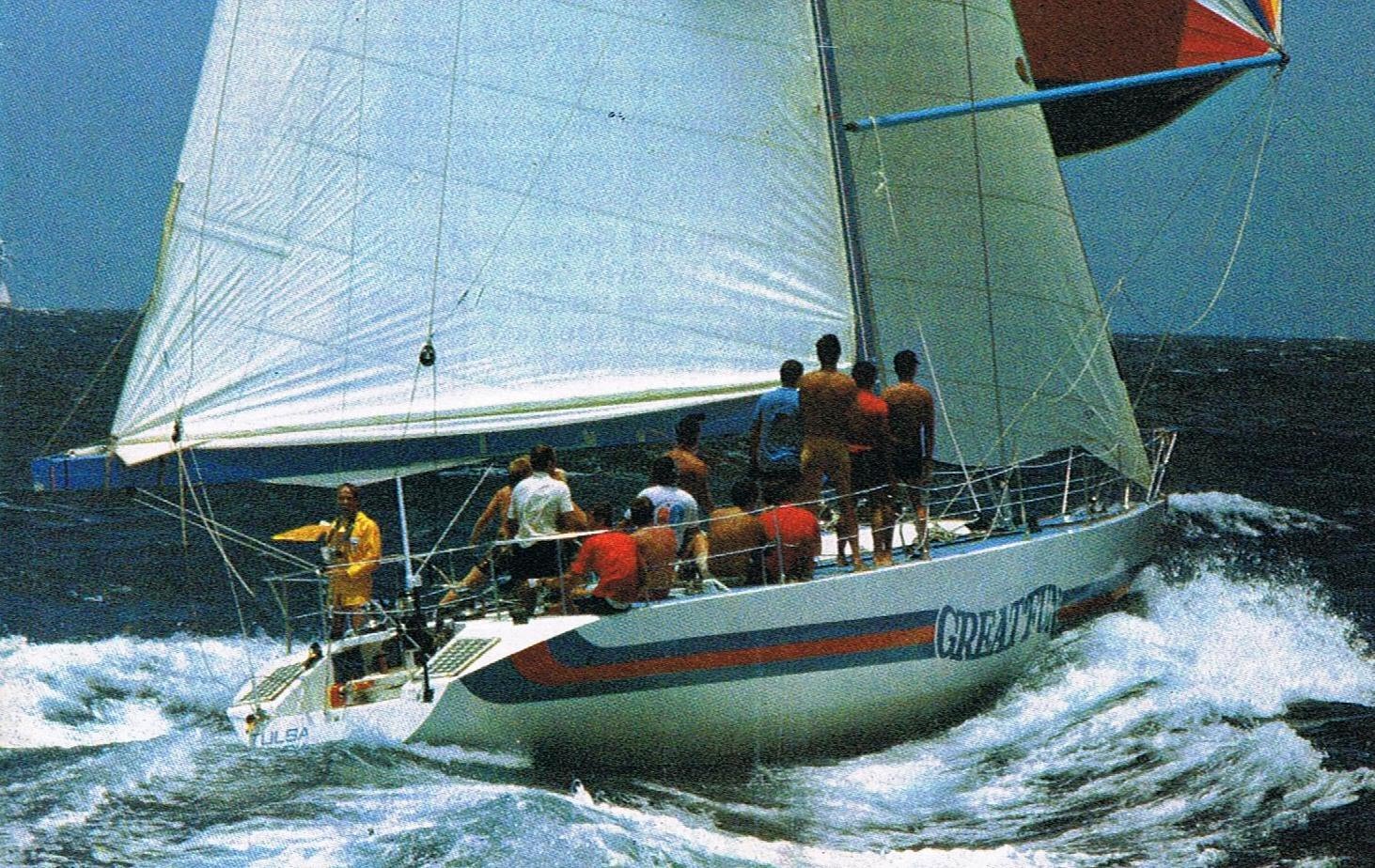
Entimmesfilm från SORC (Southern Ocean Racing Conference) 1983. Legendariska maxis som Kialoa IV, Condor, Nirvana och Midnight Sun, så klart Carat som vann klass B.
Kass bildkvalitet, men ett måste för oss som hade de här båtarna på pojkrumsväggen.
Det var tänkt att jag skulle segla nya C&C 30 när jag var i Newport, men vi fick inte ihop det tidsmässigt.
Fick i alla fall tittat lite närmare på båten och pratat med Barry Caroll som är drivande bakom projektet. Ni som har varit med ett tag minns att Carroll Marine låg bakom Mumm 36, Mumm/Farr 30, Farr 40, 1D35, Corel 45 och en del annat kul. Så det finns en del erfarenhet kring både båt- men framförallt klassbyggande.
Även Ben Hall från Hall Spars var med ombord så det var inget fel på kompetensen ombord.
Låt oss börja med att titta på resultat och seglade tider. Detta var ju båtens första regatta och man hade svårt att hitta rätt skruv på kryssen. För oss amatörer så känns det betryggande att proffsen sliuter med exakt samma saker som vi gör – även om de brukar lösa det lite snabbare.
De saker som man framförallt brottades med var spänningen i häckstagen (som ju är dubbla). Superhårt som på en TP52 eller modern lite större racer, eller lite lösare i den lätta vinden. Här rådde det stor oenighet. Samma sak med skotvinkeln på focken där man gärna vill köra tajt, men där det kanske straffar sig.
Nedan de target speeds som man räknat fram. Man nådde dem tidvis, men jämnheten saknades (känner vi igen det).
I de race som jag såg, var Farr 280 snabbare på kryssen, men C&C 30 snabbare på undanvinden. Jämför man seglade tider så ser det ut så här:
Så klart gnälldes det en del på reglerna och att både Farr 280 och C%C 30 var missgynnade. Men tittade man på vattnet så seglade man ofta jämt med två First 36.7 och en välseglad J/35. Jag roade mig med att jämflöra tiderna med den bästa 36.7an:
C&C 30 vs First 36.7
R1 00:09:32 före 9%
R2 00:12:51 före 12%
R3 00:04:42 före 6%
R4 00:04:48 efter -9%
R5 00:01:34 före 2%
R6 00:02:44 före 6%
R7 00:00:21 före 1%
SUMMA 00:26:56 före 5%
Enligt IRC skall man vara 11.5% snabbare och det ser det ju ut som man har potential att vara?
I dessa beräkningar skall man ha med att både Farr & C&C var de klart minsta båtarna i IRC3 och blev alltid överkörda i starterna av J/111, King 40 och andra båtar med längre vattenlinje. På ett distansrace ser jag inga som helst problem att göra bra ifrån sig.
OK, men över till själva båten då.
Designen kommer från Mark Mills. Han har ju haft koll på läget ett tag och ligger bakom King 40 och Landmark 36 som vi ju sett i våra vatten. Vi hade för ett par år sedan en diskussion kring när mindre lätta snabba båtar skulle slå igenom, eller om vi fortsatt bara skulle se dem över 40 fot. Respitsystemen har ju gynnat klassiska cruiser/racers under en viss storlek.
Nu verkar det dock finnas en trend där man går för prestanda, och tar konsekvenserna av detta. Aktuella exempel är FarEast 31R (och den kommande 28R), Farr 280, C&C 30 och ett antal andra båtar från okända varv i södra Europa. Målet är att bygga upp en entypsklass, men att båtarna också skall funka bra för annan racing. Och här finns en tydlig skiljelinje där till exempel C&C är avsedd för tuff racing på havet och klassad för ISO Category A.
The C&C30 is an exciting opportunity for us to take a fresh look at what a modern high performance One Design can offer, and do so with some of the best performance experts in the business, including KND Sailing Performance, a company based in Spain who we partner with on our Grand Prix racing projects like our recent Mini-Maxi Alegre. Their unique features include a specialty in CFD and VPP performance prediction, as well as performance analysis of logged data for classes such as the TP52 fleet, Volvo 65’s, and the Mini-Maxis.
Starting with the certainty that the new design would need to be light with lots of sail area for exhilarating performance, what would be necessary to reinvent the type in 2014? Listening to owners and dealers it became clear that previous generations of Sportsboats now require too many crew, and too many professional crew, to sail to their potential. Professional numbers were easy to take care of with a well-written One Design rule put together by C&C 30 builder and One Design supremo Barry Carroll who stewarded the Mumm 30 and Farr 40 classes to worldwide success.
Addressing crew numbers was another issue, which required some thought to reduce without leaving the boat overpowered in a breeze under its sizable sail plan. Our solution is to combine the lowest VCG possible with features such as the carbon fin with a hull shape that has a slim waterline beam at rest, like a conventional sportsboat, for low wetted surface area and drag. In light airs the C&C 30 should be sailed fairly upright, and with the crew weight forwards as usual to maintain that low drag configuration. As the wind increases her wider hull shape above the waterline begins to immerse with increasing heel angle, adding significant amounts of form stability and using more of the sail plans power, allowing the crew to shift aft to further increase stability. This stability from the hull form allows the C&C30 class to limit crew numbers and allows teams to focus on sailing and having fun instead of finding and managing large crews, it even encourages shorthanded sailing in the right events.
To ensure the C&C30 incorporated the latest thinking in deck and sail handling systems such as the spinnaker retrieval system Volvo Ocean Race skipper Charlie Enright was asked for his input: “Jesse Fielding and I helped design the deck layout for the C&C30 by using our experience on a variety of different boats; everything from Mini-Maxis to Skiffs to other boats in the 30 foot range. It will be ergonomically easy and extremely efficient to use.”
Hittills är 7 båtar sålda, alla till USA, men man har stort intresse från både Europa och andra platser.
Tre saker jag gillar
1 Det är en båt som “means business”. Inte så mycket finlir utan en brutal “pocket offshore racer”. Lite som en Mustang eller Camaro jämför med en välanpassad europeisk bil.
2 Offshore-fokus från start.
3 Bra mix av high/low tech. Man har inte gjort allt i kol, bara för att man kan, utan hittat ett sätt där man håller kostnaderna nere.
Tre saker jag inte gillar
1 Detaljer som kick och bobstay borde vara snyggare gjort. Men det är båt #1 och man kommer säkert att fixa detta.
2 Peket borde vara indragbart. Det är superlångt och man kommer att fastna i andra båtar i rundningarna. Förbrukningsvara…
3 Häckstagen. Hur gör man dessa trimbara på ett enkelt sätt?
Main Area: 36.66 m²
Jib area: 22.85 m²
Spin area: 116.0 m²
Upwind SA: 59.51 m²
Downwind SA: 152.66 m²
STL: 5.60 m
Skall vi titta på lite detaljer…
Sittbrunnslayouten framgår ganska bra av den här videon med Charlie Enright. Den är som väntat stor och bred, och relativt grund. Nedgångslucka och fallwinsh sitter på varsin sida precis som på en modern TP52.
Storskotsskenan sitter akter om rorkulten, men allt trim kommer upp framför rorsman. Lätt tillgängligt utan krusidiuller. Det enda som är udda är att häckstagen kommer till winschar akter om rorsman och här vill man ju inte ha en person som sitter med benen in. Osäkert hur mycket man kan/skall/måste jobba med dessa.
Clean layout, även om det är vissa saker jag inte förstår. Som varför kicken kommer till en fast råtta mitt i båten?
En grej som var supercool var falllåsen. Hall har utvecklat fallås som bygger på så kallade “constrictor”-avlastare som vi såg på METS för ett par år sedan (Ronstans variant). Dessa sitter nu inne i masten och låser fock- och storfall. Den innersta råttan på SB är fockfallet. Råttan är där bara för att hålla koll på änden. Den tunna linan innaför är för att släppa låset. En (oförutsedd) finess var att fördäckaren tog med sig linan fram på fördäck och kunde själv släppa på fallet. Lysande.
Focken justeras sedan med cunningham.
Här ser man den lilla release-linan för focken.
Och här är motsvarande arr för storen.
Jag skulle kunna tänka mig dessa fallås på min båt. Också för t.ex. revlinorna där man skipper hantera kraften ner på däck.
Akterut går fallen till de vanliga skotwinscharna.
Peket sitter instoppat i sitt fäste och hålls på plats av bob-staget. Går enkelt att lossa vid transport eller om man kommer in i en trång hamn. Snygg lösning, även om jag tror det långa peket kommer att vara i vägen på banan.
Här ser man bob-staget som sitter fast i vattenlinjen och sträcks in genom peket…
Förpiken är stor och ren och enkelt tillgänglig.
Alla trimtampar från peket.
Akterut. Det går att sätta in rörkojer om man skulle vilja för offshore racing.
Generellt sätt så tyckte jag den var större inuti än väntat. Många race-orienterade båtar blir extremt små, men den här var helt ok. Större än t.ex. Bolt 37 vilket är lite udda.
Det är helt ok att sitta nere för att navigera, eller om 5-6 man vill komma undan regnet mellan två race.
Till en spännanordning inne i båten. Den gröna “surrningen” är väl inte helt färdigutvecklad :-)
Den gula är fockens cunningham.
Kölen går att hissa upp för att underlätta transport.
Just kölen är ett av de områden där man har lagt extra energi. Själva fenan är i kolfiber och bulben är i bly. Man tittade på olika varianter av stål, men då var man tvungna att svetsa, och då innebar kol en säkrare lösning över lång tid. Plus att seglingsegenskaperna blir bättre. Även roder och en del förstärkningar är i kolfiber, i övrigt är konstruktionen ganska traditionell i vinylester/E-glass.