Wing-on-wing på J/70
Senaste tricket i J/70-klassen. Vi provade det på J/109 med viss framgång. Framför allt för att ta sig igenom Hermanö ränna då det var plattläns och omöjligt att skära, men enligt skarpa 109-seglare i England så fanns det lägen då det var snabbare.
Dags att köra lite seriösa tester med 111:an till våren.
Tipstack till North Sails One Design.
Wing-on-Wing Instructions & Video
Article by Geoff Becker. Video by Chuck Allen.The J/70 class at the 2016 edition of Key West Race Week saw more of the same in addition to a new twist. As in previous years the J/70s had the largest fleet (54 boats) and some of the toughest racing against a very talented group of sailors. What was new this year was how many of those sailors were sailing their boats on the downwind legs.
Sport boats like the J/70, with asymmetrical spinnakers, sail faster at higher angles, but the trend in Key West this year was to sail the boats wing and wing downwind. At first, the sight of these sport boats attempting to sail straight downwind seems counter-intuitive, but many seemed to be making it work to their advantage. Not really a big surprise that there is something to gain from sailing the straightest course to the mark while other boats in the fleet sail traditionally higher sailing angles and longer distances.
After talking with some of the J/70 sailors in Key West, this new downwind mode has resulted many teams practicing and perfecting the specifics of the wing and wing trimming and sail handling. However, even with teams practicing, the big question for the boats attempting this unorthodox downwind mode is: When does it work and when is it better to keep this mode in the bag? Wing and wing can provide an advantage in certain conditions and situations, if it is used at the wrong time, distance can easily be lost to other boats in the fleet. Our team, having practiced sailing wing and wing in a variety of wind conditions and sea states, has decided that the maneuver is something to be used sparingly.
So, when is the best time to sail wing and wing?
We have found that there are 3 criteria that need to be met in order for wing and wing to be an effective option. Those criteria are:
1. Wind Speed
The amount of true wind is important because the asymmetrical spinnaker is unstable and difficult to fly when sailing straight downwind. If the wind is too light, the pressure in the spinnaker will not be enough to help it fly away from the boat while on the wing. 9-13 knots of wind seems to be the sweet spot for the wing mode. Basically, enough wind to fly the sail wing and wing and not yet, windy enough to plane.
2. Boatspeed
Once sailing wing and wing, boat speed is the test to see if the downwind mode is working or not. Our criterion for boat speed is after changing our mode from VMG to wing and wing we ask, how much did our speed drop? For the wing mode to be effective, there has to be little or no speed loss relative to the boats sailing the VMG mode. Since wing and wing is most effective in the same conditions as the normal VMG mode, the speeds while sailing in pressure should be comparable and the gains made are due to sailing the shorter distance(lower angle) downwind.
3. Sailing Lane
Sailing the traditional VMG mode downwind allows a range of sailing angles, like sailing higher in the lulls and lower in the puffs. When sailing wing and wing, the mode demands a very specific sailing angle in order to fly the sail and it is important to ensure that your sailing lane is clear because changing course can easily collapse the spinnaker. We always have someone watching behind while on the wing to make sure our land and wind is clear and we are able to sail the proper angle while on the wing.
After deciding to switch from VMG mode to wing and wing, the technique and boat handling can make or break the success of the maneuver. Here some of the boat handling tricks we use to help get to the wing mode, stay wing and wing and switch back to VMG mode.
Going from VMG to the Wing
Transitioning from the normal VMG mode to wing and wing is best achieved by gybing the mainsail and keeping the spinnaker flying on its current side. When the crew is ready, the boat is turned downwind and the main is pulled across to the other side. As the boom crosses the centerline, the boomvang should be pulled tight to help flip the full battens and avoid catching on the backstay. While the main is gybing, one crew member should stand up and briefly hold out the spinnaker sheet in order to keep the clew of the sail from falling in toward the boat.
Angle of Heel
Once the main has been gybed, the boat should be quickly heeled to windward (boom up) about 10-12 degrees. The skipper or other crew member should continue to hold the spinnaker sheet away from the boat while the trimmer maintains the sheet tension. Maintaining windward heel is critical to keeping the clew of the spinnaker away from the boat, especially in the lulls.
Apparent Wind Angle
Along with the proper heel angle, maintaining the most efficient apparent wind angle is also important sailing wing and wing. We have found that sailing an apparent wind angle of 5-10 degrees higher than straight downwind is the best to keep the spinnaker flying and will maximize boat speed. Sailing too high could cause the sail to collapse and sailing too low will cause the main to shadow the spinnaker decreasing the pressure in the sail.
Back to VMG mode from the Wing
Switching back to VMG mode from wing and wing can be done by gybing the main or the spinnaker. Gybing the main is the quickest and easiest. Turn the boat into the gybe and like going to wing mode, as the main is crossing the centerline pull the boomvang tight to help it clear and fill on the new side. Rolling during the gybe will also help the boat turn and allow the crew to flatten the boat after the gybe aiding in acceleration. The other option back to VMG mode is to gybe the spinnaker. Simply, boat is heeled to leeward and turned up as the spinnaker is rotated to the new side. To help the spinnaker switch sides, and prevent it from wrapping, the trimmer should start rotating the sail just before the boat is turned.
After all the practice and racing in Key West, totaling around 50 downwind legs, I would say we used wing and wing mode on about 10-15 legs during the week. Of the legs where wing mode was used by our team, we averaged about 1-2 minutes per attempt and would switch back quickly to VMG when we were not gaining or after we had already consolidated our position on boats near us. Not every attempt we made at wing and wing worked in our favor, in fact during the event we were learning which situations were working best for our boat. Anytime we felt a loss in either our relative position, or distance on boats around us, we noted the reasons why the mode was less productive. Normally, our wing and wing losses were due to one or both of two factors…
1. Not Enough Wind – Because of a drop in pressure or being blanketed by another boat.
2. Bad Lane – Forcing us to change our apparent wind angle outside the optimum for the wing mode.
In the end, our team will be practicing our wing and wing mode more often to help ourselves and others better understand when to (and not to) use it on our way to the finish line.
This article was prepared by Geoff Becker, North Sails J/70 expert.
North Sails One Design is proud of our continued commitment to developing the fastest sails and providingthe best personal service and support for J/70 sailors. The proven performance along with our team of J/70 experts to help you to GO BEYOND is unmatched. We look forward to seeing you at the St. Pete NOOD and Midwinters. Let us know if you need any assistance with sails or getting ready for your next regatta.

Vad vill vi fråga proffsen?
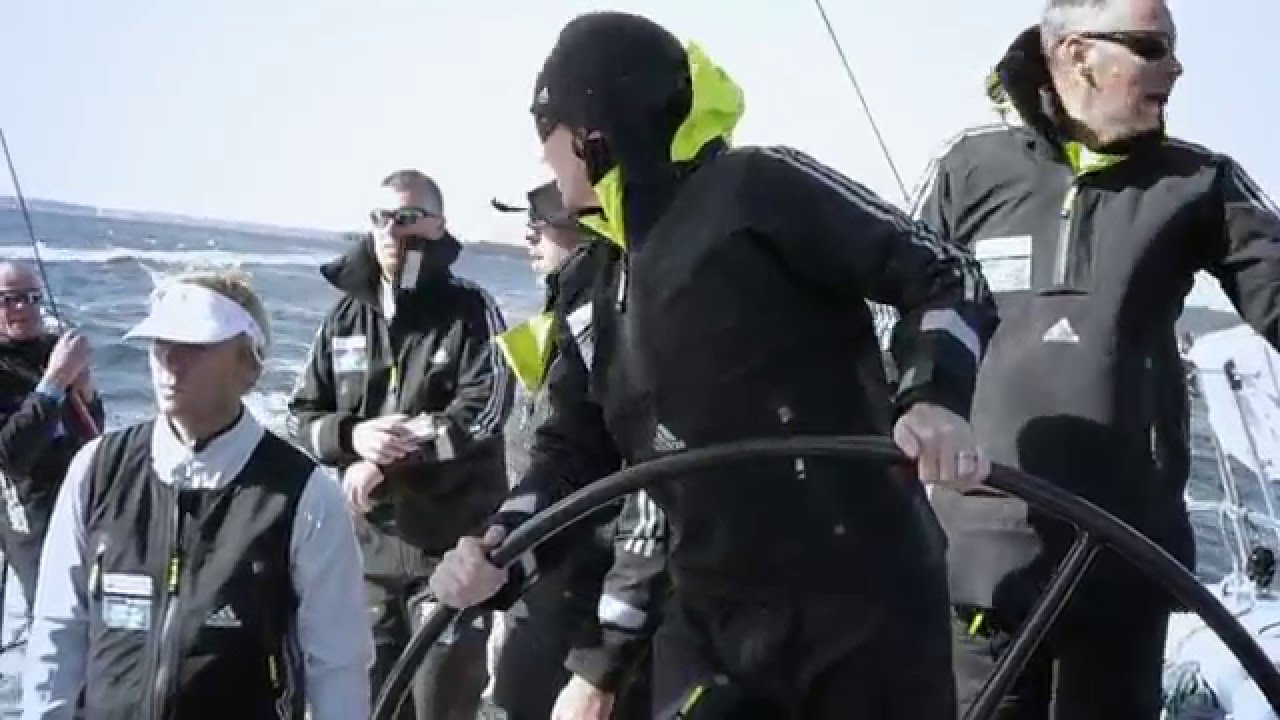
På lördag kör vi scenprogram med seglingsfokus på mässan. Jag skall prata Fastnet, men har också lovat att vara “sidekick” när vi klämmer de riktigt duktiga seglarna på pulsen.
Därför behöver jag er hjälp med smarta frågor till Martin Strömberg (här är förresten en bra artikel om “the Big Swede”), Anna-Lena Elled, Mattias Rahm, Anna Östling, OS-seglarna och alla andra som är på scen?
Skall Martin och Anna-Lena segla ihop nästa gång? Kommer Björn Hansen att ha någon chans när det skall seglas flerskrov? Varför var inte Max i Miami? Fyll på med era egna frågor i kommentarsfältet nedan.
Hela dagen kommer också att livesändas (och kan ses i efterhand).
SCENPROGRAM BÅTMÄSSAN
LÖRDAG 6 FEBRUARI – TEMA SEGLING
Seglarprofilerna Anna-Lena Elled, Search Magazine och Peter Gustavsson, Blur, gör på lördagen sällskap på scenen med Båtmässans konferencier Anna-Karin S. Öjerskog och bjuder på ett fullmatat scenprogram med fokus på segling.
11.30 Race
Volvo Ocean Race
Tillsammans med Volvo Ocean Race vinnare Martin Strömberg och on board reporter Anna-Lena Elled gör vi en tillbakablick kring racet som gick och minnesvärda ögonblick, vi diskuterar framtiden, hur Sverige positionerar sig inom internationell havskappsegling och vad som behövs för att säkra återväxten.
Mästare på Match Racing
Vi tar tempen på ”Mr Marstrand” Björn Hansen, hans svenska utmanare på World Match Racing Tour Mattias Rahm och världsmästaren i match racing Anna Östling. Vad krävs för att vara bäst när det gäller, hur ser framtidsplanerna ut och hur utslagsgivande blir boat handling när M32 gör entré? Vi får senaste nytt om touren och vad som händer på Marstrand och i Lysekil i sommar.
GKSS på väg mot OS i Rio
Segling blev Sveriges mest framgångsrika idrott på förra OS med 1 guld och 1 brons. GKSS laddar för fullt inför sommarens OS i Rio med bl.a. OS-guldmedaljören Max Salminen som växlat om till Finnjolle och 49er FX-seglarna Lisa Ericson och Hanna Klinga. Max, Lisa och Hanna befinner sig i Miami och vi ringer upp dem för att få senaste nytt på vägen mot OS. GKSS Klubbdirektör Thomas Rahm tar plats på scenen för att berätta om Sveriges medaljchanser och hur uttagningar och förberedelser går till och tillsammans med OS-medaljören Rasmus Myrgren gör vi en djupdykning kring vilka mentala utmaningar som kommer med ett OS.
13.30 Äventyr
Drömmer du om att förverkliga en dröm utöver det vanliga inom segling? Båtmässan ger dig tre olika äventyr där det krävs någonting extra men som är fullt möjligt att förverkliga. Vi bjuder på inspiration och konkreta tips som en hjälp på vägen!
Segling till Svalbard med Celeste
Den 29 juni 2015 kastade 14-mannabesättningen loss i Långedrag för att segla med Farr 65:an Celeste till Svalbard. Ett spännande äventyr som förmedlas i bild, film och ord av skepparen Bengt Tarre.
Solosegling när och fjärran
Som första skandinav har Pia L’obry deltagit i den prestigefyllda kappseglingen Transat 6.50 från Frankrike till Brasilien. Från soloäventyret över Atlanten har Pia tagit med sig katamaransegling hem och idag hjälper hon människor att realisera drömmar i den svenska skärgården.
Fastnet Race 2015 med BLUR
För första gången delar Peter Gustavsson med sig av de detaljerade förberedelserna inför och upplevelserna under Fastnet Race med teamets J111. Fastnet Race – en mytomspunnen havskappsegling som många drömmer om men få förverkligar.
15.00 Mingel
Vi som vill kan ses i North Sails monter för en pilsner och ännu mer tjôt om segling…
Med reservation för ev ändringar. Läs mer om hela Båtmässans scenprogram på www.batmassan.se

Motorbroms?
Det finns ju många sätt att få en båt att gå långsamt. Och det finns ju lite olika sätt att montera en bogpropeller.
Och för oss som inte står ut med att det är dammkorn i bottenfärgen på främre tredjedelen av skrovet, så verkar det lite jobbigt att ha en mackapär som effektivt förstör allt flöde under båten.
Jag förstår hur ägaren till den här 34-fotaren har prioriterat.
Men jag är ändå lite nyfiken på hur stor påverkan det har på farten?


Hur man kvajlar en lina
Alltid lär man sig nåt nytt.
‘Not Under Command’ is a Youtube series from Spartan Ocean Racing covering seamanship hints & tips for modern racers and cruisers. The show is presented by Chris Stanmore-Major (CSM) who has twice sailed around the world- once in a crewed race and once solo. CSM has sailed over 240,000Nm over 20 years in the sailing industry in everything from the British Royal Navy to Tall Ships and Open 60’s.
This first episode covers how to store and work with double braided lines to avoid irritating tangles in the cockpit and dangerous jams aloft.
For more information and opportunities to sail on Whitbread & Open 60’s with professionals check us out at www.spartanoceanracing.com

Hyundai Cup 2015 | filmen
Ännu en bra film från Hyundai Cup, som måste vara en av Sveriges roligaste kappseglingar?
Vilken härlig blandning av båtar! Och helt sjukt att tre så olika båtar kommer in precis samtidigt.
Båt – korrigerad tid
A22 05:18:08
Corsair Cruze 970 XL 05:19:35
TP52 05:23:02
What’s Up 1605
Det är vår!? I alla fall är det båtmässa!
Framförallt bör man gå nu på lördag 6/2 då vi har en temadag kring segling. Det blir en skön mix med Anna-Lena från Search och Team SCA, Martin Strömberg, matchracingseglare, OS-seglare, Pia L’obry och många fler. Själv skall jag prata om hur vem som helst kan segla Fastnet Race.
Jag och Anna-Lena hoppas så klart att många tittar förbi och att vi kan mingla lite efteråt. North Sails har lovat att bjuda oss på något i sin monter från 15.00, så det kan vara ett bra ställe att börja på.
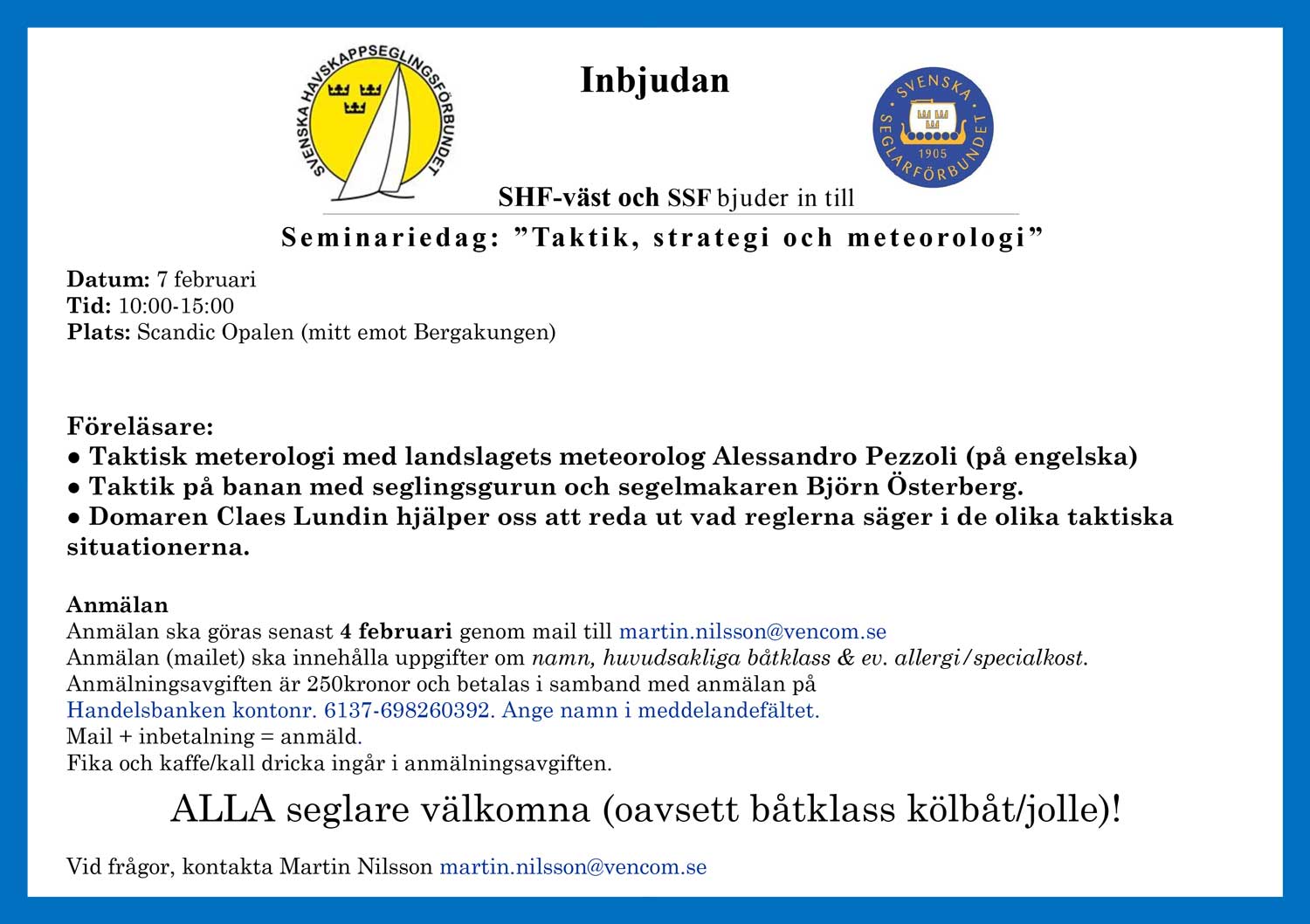
Även på söndag 7/2 händer det saker:
Även nästa vecka händer det saker. På onsdag 10/2 är det båda Tjörn Runt-träff (18.30) och Bohusracet debrief (19:00). Återkommer kring detta.
På seglingsfronten då? Ganska tunt. Men Primo Cup i Mocaco är ju alltid något.