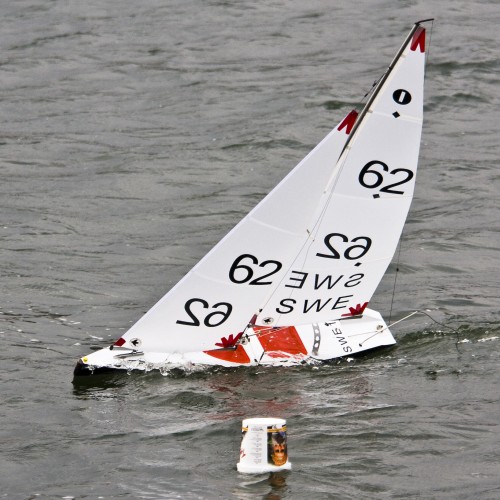
För ett par helger sedan provade jag på IOM-segling. Nu har GRSS kommit igång ordentligt och det är många aktiviterer planerade. Om ni inte redan har provat på, kan jag rekommendera det.
Roy Baker är en kille som gillar att spela musik när han är ute på sjön…
1986 Sanger low profile ski boat has been transformed into a speaker by installing eighteen 6×9 speakers, fourteen 6.5” speakers, two 5.25” coaxial drivers and two tweeters on custom made tower along with four 12” subwoofers, four TE1004 amplifiers to drive the main speakers, and a 1500 watt stereo amplifier to drive the subwoofers. The 40 speaker audio unit works with eight gel batteries.
Many other interface and performance enhancements.
Vill man snabbt få en översikt, har jag sammanställt alla hjälp-filer som en pdf. Missa inte heller Expedition-forumet. Registrerade användare uppgraderar utan kostnad, men man behöver en ny licensnyckel (tog mig under 8 timmar att få svar idag lördag!).
För er som orkar (eller har snöat in på videoformat) skulle jag också vilja ha lite feedback på vad som funkar bäst.
Gillar ni Jaycut eller YouTube som format för att titta på filmerna? Till största delen är det ju filmat med en Canon PowerShot S50 som ju inte är en videokamera egentligen (till nästa år skall det bli nåt bättre). Tjörn Runt-avsnitten kommer från superskarp DVD så där kanske man kan se skillnad i kvalitet mellan spelarna?
Kjell kommer att satsa på symmetrisk spinnaker till nästa säsong på sin First 34.7. Det är både snabbare och fördelaktigare mätmässigt än gennaker tror Kjell.
Samma sak säger Pär Larsson (First 34.7 “Sigma”) och segelmakare på Albatross.
Konstigt. Båten är byggd för asymmetrisk, och det verkar fungera i resten av världen? Bjørn Lofterød vann Færderseilasen i en 34.7 (med högre LYS än de svenska båtarna som har 1.27), man vann PHRF-mästerskapen i USA och har gått fort i IRC.
Men i Sverige går det inte?
Är det LYS det är fel på? Missgynnas asymmetriskt? Eller är seglarna här för konventionella? Är det för svårt? Eller saknar vi tålamod? Vad är haken?
Fredriksson fortsätter att ställa bra frågor till seglingsprofliler. Senast i raden är Martin Abenius, känd från juniorseglingen och nystartade Nääs Yacht Club (bilden).
Speciellt intressant är ju kompassen, där andra (framförallt B&G och NKE) har legat längre fram. Viktigt för vanlig kappsegling men framförallt för shorthand där man i vissa lägen skulle vilja använda autopilot. Vi ser fram emot de första testerna.
NEW HIGH-ACCURACY COMPASS
TRANSDUCER FROM NEXUS
(METS 2007) Nexus Marine AB will be showing a new high-performance compass transducer for the first time at METS 2007. The instrument offers unrivalled accuracy under the most demanding conditions.
The HPC (Heel Pitch Compensated) compass uses the latest materials and precision engineering techniques to give an accuracy of plus/minus 1° to a maximum heel of 60°, vastly superior to the great majority of compass transducers currently available.
Fully compatible with the Nexus NX2 and NXR instrumentation systems, the HPC features a six-axis configuration that also incorporates heel and pitch, giving exceptional results for data such as true wind angle even when the boat is at a substantial angle of heel.
The new compass transducer also comes with a network bus and an NMEA 0183 output port, enabling it to be fully integrated with most modern instrumentation systems available today, and yet the entire instrument is only the size of a small mobile telephone.
The HPC represents a real advance in high-end racing compass transducers. It combines accuracy and the capability to integrate with a wide range of navigation systems with a sophisticated and compact structure that requires minimal space or maintenance. Nexus will be offering it in 2008 as a standard component of its family of instrumentation systems, and also as a standalone unit for owners looking to upgrade their existing systems.
THE NX2600 NAVTEX ANTENNA FROM NEXUS
ENHANCED PERFORMANCE AND COMPATABILITY
(METS 2007) To complement the launch of its new NX2500 DSC VHF radio with NAVTEX, Nexus Marine AB has also developed a new, high-sensitivity NAVTEX antenna.
The NX2600 is an H-field NAVTEX antenna / receiver with a two channel receiver capable of monitoring both 518 and 490 kHz frequencies, enabling it to receive local as well as international transmissions.
As well as interfacing seamlessly with the NX2500 and other compatible equipment the NX2600 can also communicate directly with a PC using the optional USB PC kit.
The NX2600 is mounted on a standard VHF antenna bracket. When used with the NX2500, the DSC VHF is capable of storing up to 64 NAVTEX messages and has a filter function that enables the user to select which stations and which messages they wish to record.
THE NX2500 DSC VHF WITH GPS & NAVTEX
THE NEXT GENERATION OF MULTIFUNCTION RADIOS
(METS 2007) Nexus is delighted to announce the launch of the NX2500, its next generation multifunction fixed VHF radio.
The NX2500 is the successor to the popular S15, a ground-breaking product that combined a DSC VHF radio with a GPS repeater and NAVTEX capability. While maintaining a similar styling to its predecessor the NX2500 has been completely redesigned internally, and the latest electronics ensure that the new unit uses less power, gives enhanced reception and transmission, and is less susceptible to interference from other equipment.
The NX2500 is the perfect unit for exposed consoles with limited space, bringing as it does a wide range of data to a single screen. Ideal for RIBs and flying bridges the large format screen allows the simultaneous display of more than one data set in large, easy to read digits. This new DSC VHF is also an invaluable safety aid; the DSC radio in conjunction with the GPS antenna will transmit the boat’s exact position at the touch of a single button in the event of distress, while the NAVTEX service helps keep the user out of trouble by supplying weather and navigation alerts.
A wonderfully versatile communications device, the compact NX2500 is perfect for RIBs, small fishing boats and leisure vessels of every class.