Tjörn Runt | startlistor
Finns här. Vi startar i “Kölbåtar 3” med 33 båtar med LYS från 1.29 till 1.66. Inte helt lätt att hitta ett bra spår i det fältet…
Det kommer också att finnas tracking på en hög med båtar, inklusive “Blur”, på Livetracker.

Finns här. Vi startar i “Kölbåtar 3” med 33 båtar med LYS från 1.29 till 1.66. Inte helt lätt att hitta ett bra spår i det fältet…
Det kommer också att finnas tracking på en hög med båtar, inklusive “Blur”, på Livetracker.
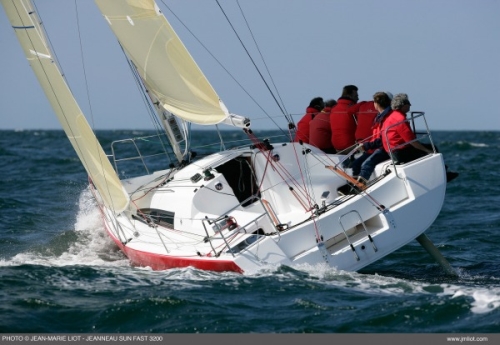
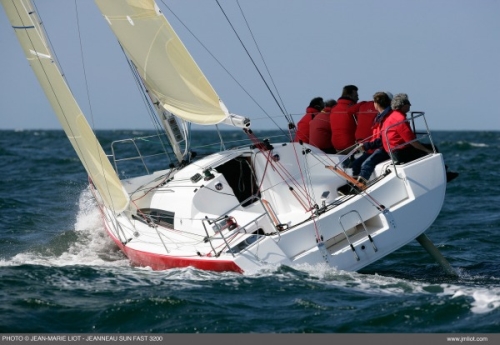
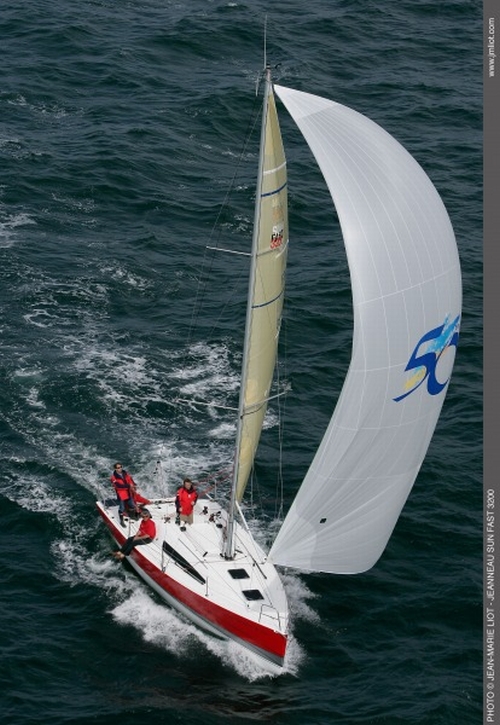
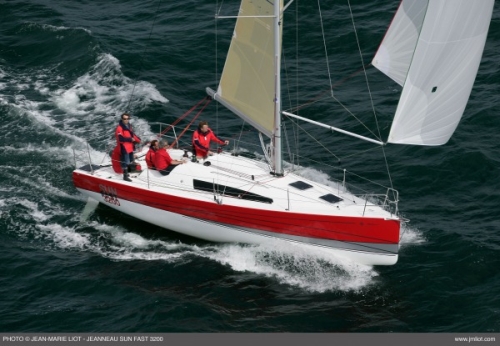
Jean-Marie Liot har skjutit lite bra bilder på nya Sun Fast 3200. Den annonserades på Paris-mässan i december, men sedan har man inte sett så mycket.
Video och polardiagram.
Ser ju kaxig ut?



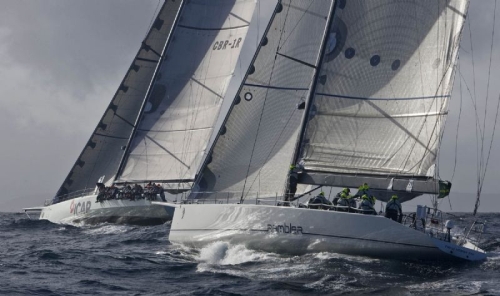
… skiljer mellan Rambler och ICAP Leopard vid Fastnet Rock! 90 båtar kvar i ett Fastnet som lever upp till ryktet. Foto: Rolex/Daniel Forster
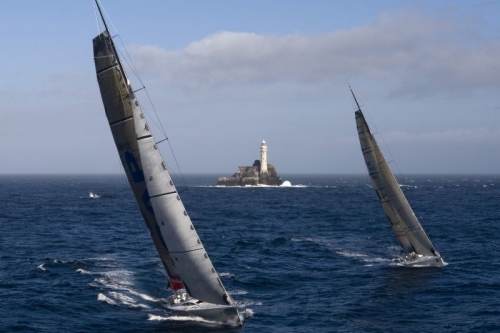
Foto: Rolex/Carlo Borlenghi

Foto: Rolex/Carlo Borlenghi
Race leaders used the strong breeze of an advancing low pressure system to power across the Celtic Sea and round the Fastnet Rock early evening on Tuesday. With the race leaders heading home, the bulk of the Rolex Fastnet Race fleet still racing is midway between Land’s End and the Fastnet Rock sailing in southwesterly winds of 25-30 knots.
The super-maxis were neck and neck reaching up to the Rock at 14 knots in bright sunshine, rounding nearly together and then going on the wind to round the Pantaenius Buoy to port, some fives miles to the south west of the Rock. The 90-foot Reichel Pugh-designed Rambler went past at 18:00:35 BST followed by the Farr-designed 100-foot canting keeled ICAP Leopard at 18:00:38 BST. Subsequently, PRB, Delta Dore and Cheminees Poujoulat from the Open 60 Class have rounded. From the buoy, the distance to the race finish in Plymouth is 251 nautical miles.
After midnight the breeze is expected to drop and by the early hours of Wednesday the breeze will shift to the northwest and settle in around Force 6/7 (22 – 33 knots). Right now the leading boats are on track to break the race record, which would require a yacht to finish by Wednesday before 1748 BST – but this has been said before in previous races and there is plenty of racing left before the finish. The existing monohull record of 2 days, 5 hours and 8 minutes (average speed 11.13 knots) was set by RF Yachting in 1999.
Earlier in the day on board the US entry, Rambler, skipper Ken Read recapped the race so far, “The predicted first front came with a southerly shift and very squally, rainy and windy conditions for us between Start Point and Land’s End..full on and of course it has to be at night! We can report virtually no breakage even after some 40 knot squalls all tight reaching. Sometimes a bad combo as boats this fast tend to be hard to slow down and have a tendency to launch off a wave with bone chilling crashes when you land.”
Read continued, “Eight headsail changes and about ten reefs/unreefs, late morning came past Land’s End and a completely unpredicted lull. Went from a blast reacher with a single reef, to drifting and slatting in a matter of minutes, and as the sun rose we realized we were in a park up with Leopard, and several of the 60’s all around us.”
Clearly, enjoying the current conditions, Read described the passage across the Celtic Sea, so far, “about 0700 the southerly re-filled and we have had a very pleasant few hours blasting across the Celtic Sea with our code 0 up and averaging speeds in the high teens. But this won’t last long.. we will have the #4 or storm jib up again with a reef or three in order to get to the Fastnet Rock in once piece and try to keep close tabs on Leopard. All in all, an awesome race so far.”
In the Open 60 fleet earlier today, Alex Thompson on Hugo Boss was lying in fourth place and said, “We currently have 20 knots of wind from the southwest and a horrible lumpy sea state. We expect to reach the Fastnet Rock at around 20.30 this evening. We are all ok and in good spirits, but we are pretty tired and hungry. I am extremely pleased with the new boat. It was obvious yesterday that she is on the pace. After two years designing and building her, it is very nice to see that we have a fast boat.”
Last year’s overall Rolex Fastnet Race winner Jean-Charles Chateau on the 33-foot Nicholson, Iromiguy was not to have a repeat performance and retired at 1315 this afternoon. Racing in his fifth Rolex Fastnet, Chateau said, “the seas were very rough and the boat is old. I polled each crew member whether they wanted to carry on and we decided to retire.”
Onboard Premier Cru, at 0300 this morning they had two reefs in and a trysail up and were “being thrown like a rag doll in a washing machine”, 12 hours later at 1500, they were two miles south of the Lizard still being “bounced around, but spirits are good and the chef is in top form – we’re getting ready for Land’s End and the Celtic Sea.”
Janet Grosvenor, Racing Manager of the Royal Ocean Racing Club, commented “it has been a testing day for the crews in the Rolex Fastnet Race and for those onshore in the race organization. We are very pleased at the way the Coastguard, the RNLI and ourselves have interacted over the last 24 hours in responding in a measured and confident fashion to the situation. There have been a lot of retirements, but importantly there are a lot of yachts that have faced up to the difficult conditions and that are still racing.”
At 0700, the Prima 38, Oz Privateer had passed the Lizard and found the conditions manageable. But as they were bearing away, the forestay broke and the mast came down in three pieces. Skipper Nick Barlow, said, “thanks to the safety training directed by the RORC everyone knew what to do and how to do it.” The crew were able to bring the boat back to Plymouth under jury-rig and engine power.
As of the latest OC Tracker position update at 1700 BST, leading on corrected time are Rambler (USA) in IRC Super Zero; Chieftain (IRL) in IRC SZ Canting Keel; Courrier Du Coeur (FRA) in IRC Zero; Parallel Blue (GBR) in IRC 1; Foggy Dew (FRA) in IRC 2; Tigo IV (GBR) in IRC 3, and PRB, in the Open 60 class.

Foto: Rolex/Carlo Borlenghi ‘
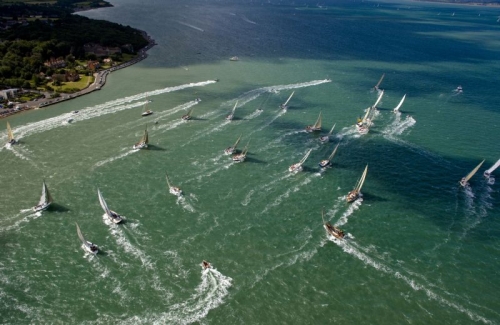
Foto: Rolex/Carlo Borlenghi

Foto: Rolex/Carlo Borlenghi
Det har förts en debatt kring klassindelningen både på Tjörn Runt, Gotland Runt och nu Göteborg Offshore Race. Tänkte att man kunde kolla vad seglarna föredrar:
Alla i samma. Alla kör mot alla. Det kan ändå inte bli helt rättvist och på detta sätt får man iallafall fram en totalsegrare (vilket är bra för media). Exempel: Göteborg Offshore Race 2007.
Stora klasser. Vi vill ha få stora starter. Viktigt med många båtar att slåss mot och enklare att arrangera. Exempel: Tjörn Runt eller Gotland Runt med 72 båtar i LYS2 = LYS 1.07-1.30.
Mindre klasser. Vi försöker skapa mindre klasser med entyp eller båtar av samma typ/mätetal/ambition. Totalen blir bara en kul bonus. Exempel: Lidingö Runt eller Færderseilasen med i snitt 20 båtar per klass.
Hur vill vi ha klassindelning?
Alla i samma 9 röster = 7%
Stora klasser 39 röster = 29%
Mindre klasser 86 röster = 64%
Total Votes: 134


Ett dygn efter utsatt tid gick starten för Fastnet Race. Man ville inte att hela flottan skulle möta stormvindar på Irländska sjön. Nu blir det blåsigt, men folk har någonstans att ta vägen. Hoppas folk har koll på läget!? Foto: Rolex/Carlo Borlenghi
Sjysst “Race Player” för att följa racet online. Man har också en “Standings Lite” som man skall kunna använda ombord.

Idag var det race från Marstrand till Stenungsund, egentligen för Offshore Race-båtarna men av dem var det “Edin Progressiva”, “Aero” och en Arcona 370 som var med. Dessutom vi och en del andra båtar. Totalt 8 båtar startade 10:05 i södra inloppet.
Kort kryss ut i 4-5 m/s innan man föll och gick norrut. Kass start (överlägset bäst var Mats Berntsson i sin alltid snabba First 31.7 “Blade” som var halva havet före alla andra). Sedan spårig läns mot Stenugnsund. Alla gick lika fort; vi, en Arcona 370, First 35 Match, “Aero” och “Blade”. Ganska OK; men vi hade nog haft nytta av vår riktiga gennaker (körde återigen med den lånade från A-35:an (tack Pelle & Linus). Sedan försatte vi oss i en del situationer för att vi tänkte som spinnakerseglare, “nä vi vill inte offra en gipp på att komma ut från udden”. Vi måste segla mer offensivt i dessa lägen och lägga de gippar som behövs.
Ingen riktig koll, men “Blade” borde ha vunnit på LYS. Vi hamnade nånstans mitt i.
Update: resultaten fanns förstås på StSS sida:
1 Mats Berntsson StSS SWE 377 Blade First 31,7 1,19
2 Ulf Nordqvist StSS S 30 Chanty Arcona 370 1,31
3 Mikael Grundström TJSS S 8492 S/Y Dever Rapier 30 1,10
4 Roger Ahlqvist GKSS SWE 14293 Aero Mumm 36 1,36
5 Peter Gustafsson GKSS SWE 326 Blur J/109 1,32
6 Andreas Samuelsson SSVÄ SWE 9 Miss Match Bavaria 35 Match 1,29
7 Hans Ristner KKKK SWE 21 C-Rig CB 365 1,28
8 Stefan Eliasson SSV SWE 109 M SUS Dragon Fly 26 1,70
9 Roger Edin VaSS SWE 10008 Progressiva One Off 1,66
Känns bra att vi skall vara snabbare än en Arcona 370 och lika snabba som en 400. Hoppas det hinner komma ett nytt LYS-tal innan TR :-)


Vi var säkert några som i samband med Gotland Runt undrade vad Aspect 40 var för något. Här har vi svaret. Onekligen lite kul proportioner: 12.00 x 3.20 x 2.00 m, 4200 kg, 85 m² krysställ och 132 m² gennaker.
Aspect 40 hade sin jungfrusegling på fredagen före Gotland Runt så vi är naturligtvis också väldigt nöjda med insatsen. Tyvärr fastnade ett gennakerfall strax före Knolls Grund i masttoppen och vi hade en kille, Johan Säwensten, sittande högst upp under en knapp halvtimme för att manuellt lossa gennakern och arrangera för ett nytt fallsystem med band och lösblock. Det i kombination med en inte perfekt genomförd kryss upp till Visby direkt efteråt gjorde att vi tappade ledningen. Med tanke på att vi inte tidigare seglat tillsammans och att båten var helt ny är vi ändå mer än nöjda. De 361 sjömilen avverkade vi på 53 timmar i en helt nybakad och oprövad fyrtiofots segelbåt. Besättning ombord var proffsseglarna Martin Angsell (rorsman), Per Johansson och Johan Säwensten samt Rolf Tannergård (Skeppare), Mats Feldtmann (Navigatör), Christer Holgersson och Håkan Karlsson.
Idén bakom Aspect 40 är att återuppväcka den traditionella skandinaviska båttraditionen i modern tappning. En segelbåt som prioriterar segling i högre grad än de båtar som är vanligast på marknaden just nu. Aspect 40 är därför relativt smal med sina 3,2 meter, har liten våt yta och lågt deplacement på ca 4300 kg, och samtidigt god förmåga att bära segel. Vi har lagt stor möda på att hydrodynamiskt optimera undervattenskroppen och på att använt moderna byggmetoder med kevlar- och kolfibersandwich. Samtidigt har vi försökt åstadkomma en snygg båt med tilltalande formspråk och inredning. Båten visade sig under Gotland Runt vara bra allround, enastående i lätta vindar och halvplanar lätt vid undanvindssegling. Under bidevindsegling från Visby till Alma i ca 8 sekundmeter snittade vi 8-8,5 knop vilket även det känns som godkänt.
Första båten saknar ännu ventiler på ruffsidorna och en del andra saker innan den är färdig, vilket framgår av de bifogade bilderna. Nu när första båten testats och visat sig så välseglande och rolig planerar vi nu för en kommande serieproduktion. Det är redan klart att minst tre båtar kommer att byggas under året. Om tillräckligt intresse finns funderar vi också på en entypsklass. Mer information om framtida planer kommer efter sommaren men redan nu går det bra att ställa frågor och anmäla intresse på mats.feldtmann@aspect40.se.


