
50-fots foiler för Sydney Hobart
Det här är völ ganska rätt:
50 fot
5 ton
7-8 i besättningen
Och snabbare till Hobart än WIOXI eller Comanche :-)


The RORC and the RYA go Double-Handed
Developing double-handed offshore sailing in the UK – The RYA and Royal Ocean Racing Club (RORC) © Paul Wyeth/pwpictures.com
The RORC and the RYA go Double-Handed
Developing double-handed offshore sailing in the UK – The RYA and Royal Ocean Racing Club (RORC)
World Sailing’s landmark decision to select a Mixed Two Person Offshore Keelboat event for the 2024 Olympics and the recent announcement to hold an Offshore World Championship for mixed double-handed sailing in October 2020 has encouraged the RYA and Royal Ocean Racing Club (RORC) to combine their efforts to develop double-handed offshore sailing in the UK.
Double-handed entries for RORC’s iconic Rolex Fastnet Race have increased from 36 boats in 2017 to over 90 entries in 2019, with 63 of those entries racing under IRC rating system, demonstrating a strong desire by people to sail double-handed offshore.
Initial indications from World Sailing is that for the Olympics they will not be selecting one particular class of boat until late in the Olympic cycle and that the intention is to focus on the discipline rather than the equipment. The RORC’s Season Points Championship provides the perfect playground to develop the skills required to sail double-handed in existing boats of approximately 10m LOA. All of the RORC races have double-handed divisions and an overall series prize in addition to the IRC Two-Handed National Championship in September which consists of the Cherbourg Race one weekend followed by a weekend of inshore racing. There will also be awards for the top mixed double-handed team to encourage mixed entries.
RYA Director of Racing and former Volvo Ocean Race skipper Ian Walker is excited at the prospect.
“We do not yet know the exact format or equipment for Paris 2024 but that doesn’t mean we cannot get afloat and start improving our double handed offshore skills,” said Walker. “I hope that this will create an opportunity for some younger sailors to team up with boat owners or to represent their clubs and we will be watching these events and seeing what talent is out there. Britain boasts some exceptional offshore sailors, both men and women, competing at the highest level, but we are kidding ourselves if we think we are even close to the depth of the French offshore shorthanded sailing scene.”
RORC CEO Eddie Warden Owen is also very keen to see double-handed sailing grow within their existing events:
“The RORC’s Season Points Championships has seen consistent growth in double-handed sailing and we have prizes for both open and mixed double-handed teams. This year we have included a double-handed division in our ‘coaching whilst racing’ RORC Easter Challenge which, with the RYA’s support, we will be providing specific double-handed coaching and advice from Nikki Curwen.”
The RYA currently support keelboat activity through support of the British Keelboat League in addition to the National Match Racing Series and the British Keelboat Academy. Keelboat Manager, Jack Fenwick is looking into how to further support double-handed offshore sailing in the UK:
“The first World Sailing Offshore World Championship is going to be held in 2020. I am sure there will be tough competition between nations to qualify for this event and just as tough a battle to represent Great Britain. We will be keeping a close eye on those British sailors participating in the RORC Two-Handed series as well as any British teams competing in overseas events. Our first priority is to see how we can support anyone looking to get into double-handed sailing with some coaching clinics.”
Further information: http://www.rorc.org, https://www.rya.org.uk
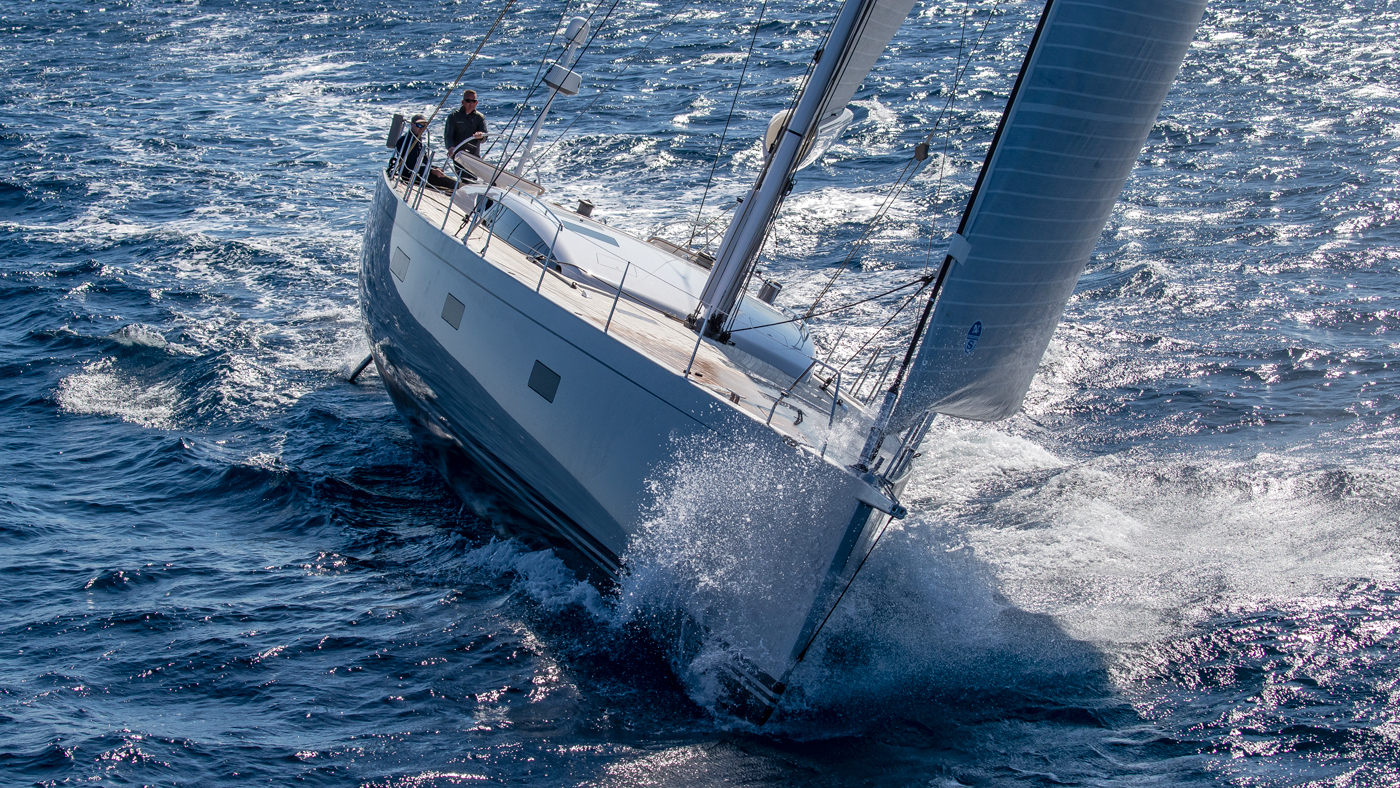
Baltic 67 Manyeleti | photoshoot
När jag fick frågan om att ta mig till Palma ett par dagar för att segla Baltic 67 Manyeleti, så var det inte svårt att tacka ja. Man fick jobba dubbelt så hårt veckan innan bara.
Sedan jag seglade Watski 2star på Baltic 50 Spirit, så var jag med på Baltic Yachts i Finland för en refit för att göra den båten mer shorthandedvänlig. Jag seglade också med den Baltic 56 som sedan seglades till Australien. Och nu var jag mycket nyfiken på hur det blev när man paketerade alla dessa erfarenheter i en ny Baltic 67.
Toby Hodges var i alla fall mycket imponerad när han provseglade båten.

Vi började med en tur till North Sails i Palma. Det var gamla Doyle-loftet som numera är North, och vi satte i kablar i code 0 (den ser inte så stor ut när den ligger ovanpå en stor från en J-class).

Martin Gadman från Happy Yachting och Brad Favelle får koll på grejerna. Både code och A3 rullas top-down på rullar från Ubi Maior.

A3 på golvet. Här är ju förliket löst och bara fallhorn & hals är anslutna till rulle/kabel.

Godnatt. I morgon blir det segling…

En av de saker som fascinerar mig allra mest när båtar blir stora är interiören, och den volym man får. Det går från att vara en ruff till en designerlägenhet. Här är det Design Unlimited som har fått till en mycket smakfull inetriör….

Ganska ok kontor?

Det som nästan blivit bäst på hela båten är pentryt. Grymt genomtänkt och massor av ytor och förvaring. Och inga problem att jobba i även när det lutar.

Annat än kylboxen på J/111.

Owners cabin förut.

Vill man se hur noggranna man är på varvet så är det kul att krypa in i maskinrummet…


Godmorgon.

Första uppgiften för dagen var att ta bilder för motor med taket över sittbrunnen uppe.
Det visade sig att det var Jesus Renedo, en av mina favoritfotografer, som skulle fota på båten nu på morgonen, och från helikopter senare på dagen.

Instruktionerna var tydliga. Full power med A3, gärna med land bakom, och sedan bidevind med litre släpp i skoten. Lite halvnervöst då det blåste nästan 20 knop, och vi inte ville strula till det med en helikopter på väg.

Det är vår!

Brad trimmar gennaker.

Martin, Jim Wadham från Baltic och jag skulle hålla oss under däck under fotograferingen.

Fin vy från helikoptern. Foto: Jesus Renedo.
Resten av bilderna nedan.

Och från mitt perspektiv. Svårt att hålla sig från att kika upp.

På väg tillbaka till Palma för att släppa av Brad & Jim.

Erik Lindgren och Jim verkar nöjda med dagen.

Martin är nöjd med att vara på havet. Han har levererat all löpande rigg till båten, och hade några småsaker som skulle fixas. Vissa dagar är jobbet som riggare lite enklare än andra.

Vi valde att segla söderut för att ankra i en vik. Initialt var jag och Martin lite tveksamma, men vi fick snart omvärdera.

Push button sailing. Det mesta sitter på hydraulik, och alla winschar är elektriska.

Solnedgång.

“Terminator”-style arrangemang som fälls upp hydrauliskt med ankare och allt.

Undertecknad med headset för att kommunicera med Erik som sköter ankaret. På temat science fiction…

Godnatt…

Godmorgon. Nu fattade man vitsen med att ligga på svaj, alldeles ensamma vid Platja Des Trenc.


Även på vägen hem fick vi en fin halvvind.

Och så här blev bilderna från Jesus Renedo. Inte illa.


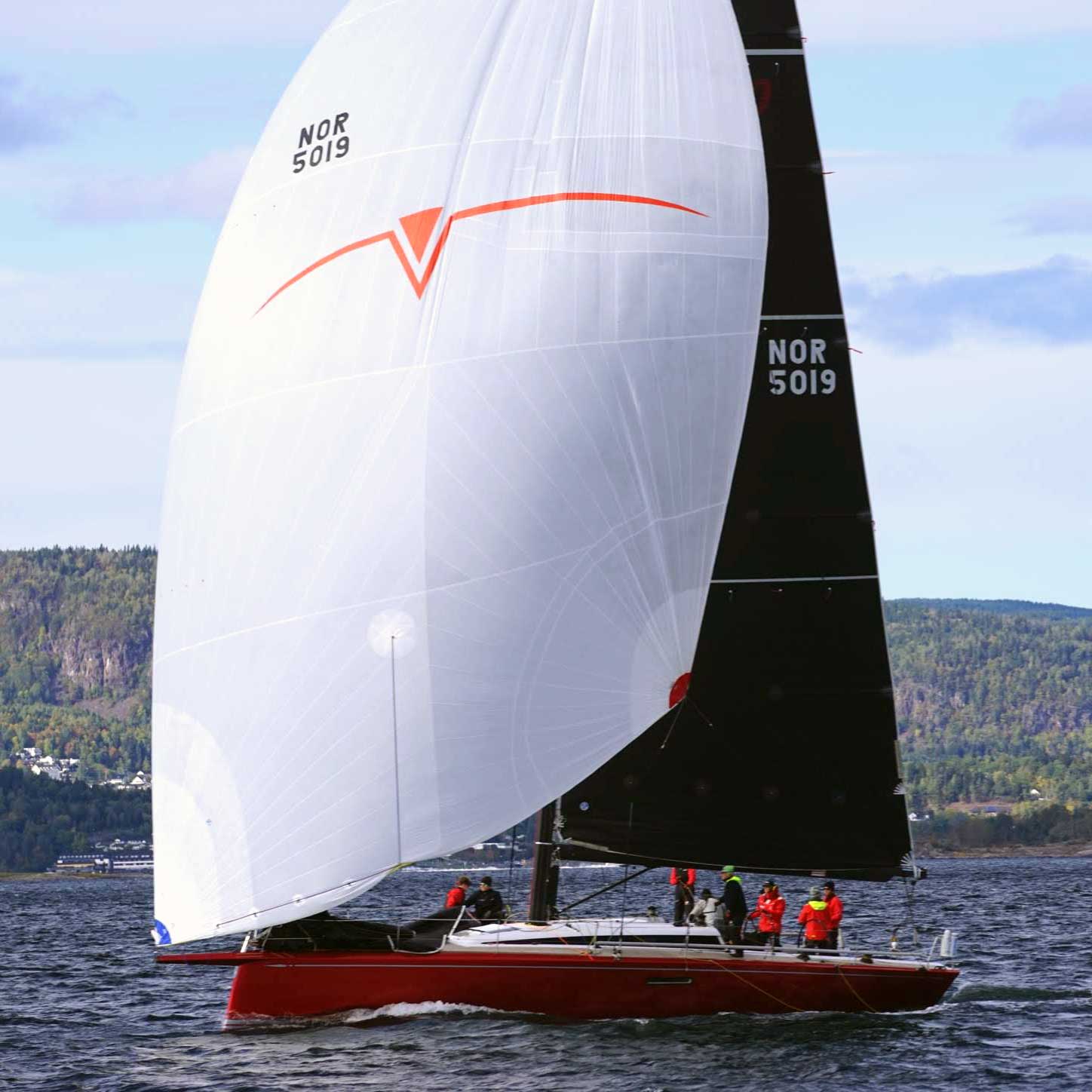
Dags att anmäla sig till Marstrand Big Boat & Skagen Race
Club Swan 50 Proxflyer är senaste anmälda båt till Marstrand Big Boat Race.
Glöm inte att anmäla er till Skagen Race för att få en totalupplevelse, med både kappseglinmg på havet och bansegling på Marstrand. Här kan man starta både från Åsgårdsstrand, Marstrand eller från Helsingör. Eventuellt kan Skånebåtarna köra från Helsingör med SRS för att slippa ta ut DH enbart för detta race.
Vill man traila (eller segla) till Marstrand före starten på onsdag kväll, så ordnar vi så klart plats för att ställa trailer och annat.
Archambault Grand Surprise Rebellion, Carl Fjällman
Club Swan 42 Sirena, Peter Buhl
Club Swan 50 Proxflyer, Jan Muren
Dehler 36sq Esquire, Krister Ahlqvist
Dehler 41 GALANT, Jan Strömbeck
Dominant 105 Lady Godiva, Anders Dahlsjö
Elan 340 Endorfine, Ketil Samuelsen
Far East 28R CLC Housing, Marcus H:son Lindfors
Far East 28R happyyachting.com, Martin Gadman
Far East 28R Nemo R, Hans Broman
Far East 28R Take Off Too, Jörgen Wennberg
Far East 28R Vinda, Martin Alvefjord
FarEast 28R Röde Orm, Göran Wiking
Farr 30 Cheyenne, Anders Helmrich
Farr 30 Evo Granville Express, Birger Lie
Farr 30 Farrari, Lars Aarum
Farr 30 Farrgo, Sebastian Glansk
Farr 30 Letto di Pletto, Lars Engvall
Farr 30 Onecorner, Göran Frick
FinnFlyer 36 Zlatan, Lars Wikander
First 36.7 Surfer Girl, Tomas Wängberg
First 36.7 Tempo, Rune Pedersen
Grand Soleil 43 FeOs, Tue Andersen
J/109 Jubel, Jon Holm
J/111 Blur, Peter Gustafsson
J/88 J88.se, Jonas Dyberg
Landmark 43 White Shadow, Torkjel Valland
Seaquest 36 milliways, Andreas Brunvoll
Sinergia 40 Sons of Hurrycanes, Jon Sverre Høiden
X-35 Firefly, Johan Lindell
X-41 Gottix, Gustav Gotteberg
X-41 Kwanza, Sten Haeger
X372 masthead Marius X, Charles Jobson
X4³ Mustang, Lars Walker
Xp 33 Coquette IV, Anders Kuikka
Xp 38 BlueS, Hans Johansson
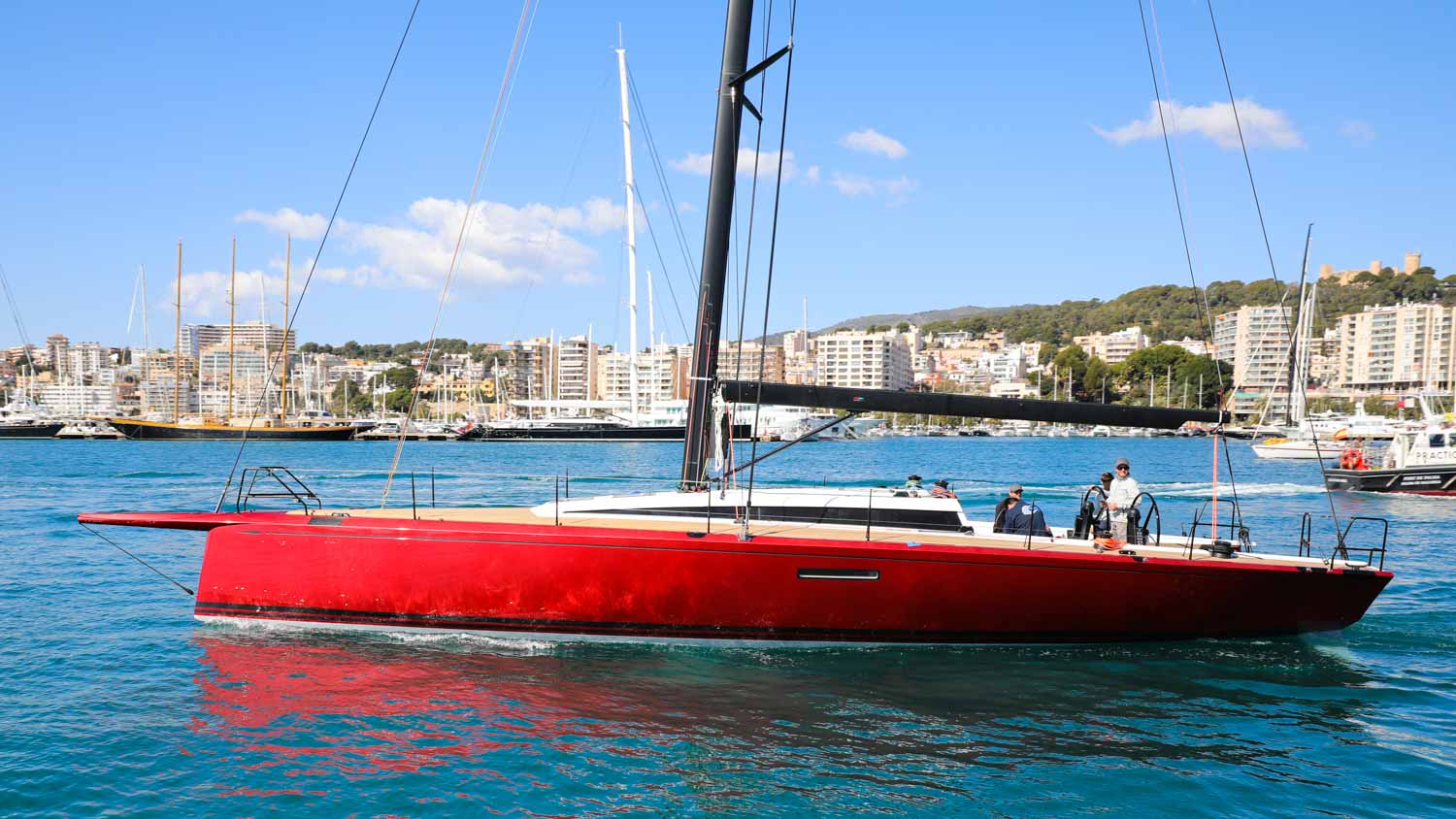
Båtspaning i Palma
Spanade lite båt i Palma i veckan. Helt nya GBR 5023 Perhonen på väg ut för tester.

Vad tror vi om den här travelliften? 1000 ton är en bra början…. Enligt uppgift världens största.

Wallycento Magic Carpet ritad av Reichel/Pugh. Inte mycket lateralplan när man slår ihop kölblad och roder. De senare båtarmna, som Galateia som låg bredvid, har haft ett djupt enkelroder.

En klassiker.

Fler bilder på Facebook.

J/111 Blur³ B&G H5000 installation
As happy as you are looking at a pile of packages containing new instruments, it does make you a little nervous about the installation.
Martin Gadman from Happy Yachting and I committed a full day to make the most of his knowledge. Before that, I had done most of the time-consuming jobs running the wiring and assembly. In total, we spent 35 hours from clean boat to working system…
After 6 seasons we know how to sail the boat and know how we want to use the electronics. So the relevant people in the team had a pretty good idea of what was important when we had the chance to reinstall.
Some important factors were:
Ergonomics. Everything must be in the right place, so the right people view them properly and utilize all functions. Here we have removed some displays and moved others to make sure they are all in the right places.
Robustness. Everything must be mounted to withstand severe weather, flogging sails and moisture. Where the plotter has previously been mounted in a bracket, we will now mount it in proper housing. Where the mast instruments were previously open at the back, they are now covered and many other small improvements to make the system really robust. In the last Caribbean 600, several boats retired because the electronics went down – so that risk has to be minimized.
Serviceability. This is easy to forget. Most people put electronics in, behind or under stuff where they are not visible. However, when you need to, it’s completely impossible to access them. On Blur, everything will be easily accessible in darkness and +20 knots wind.
This is the second article in this series.
In the first, I explained why we chose B&G and our thoughts behind the setup.
J/111 Blur³ moves to B&G H5000

In the cockpit, we previously had two multi-displays on the sides and one on the steering wheel. We’ll remove the latter, and the only thing at the wheel is now a Zeus³ 7” plotter, which can control the autopilot and display data.
The two Graphic Displays on the cockpit sides look good both when you stand…

… and also when you sit and steer or trim the mainsail. Back a meter from the screen, you can see how it looks from the helmsman’s position.
Here we show tactical data, such as current, bearing/distance to mark, time to layline and TWA on the next leg. Data that is used occasionally, but does not need to be in the line of sight.

The autopilot controller we have chosen to put in the front of the cockpit. Previously, it was located at the engine controls down by the left foot when standing behind the wheel. Now you can control the pilot on the chart plotter, or with the remote, but also sit in the front of the cockpit to adjust the settings.
Here you also sit when shorthanded, so the control is close to hand. Or when motoring. Previously, the NKE remote control has often hung here to be easily accessible.

It can be a little messy to get everything installed nicely at the chart table. All new boats have very nice cabinets, but after a couple of seasons, it usually gets crowded and looks like spaghetti. This time we did everything from scratch.
In connection with this, I also chose to separate all navigation gear on separate fuses. Not necessary, but less dependency seems like a smart move?
In addition to the H5000, there is also an AIS from True Heading, our own GPS, VHF, WiFi and some other stuff.

Click on the image for a larger variant. What you can see is H5000 Hercules, AIS and two 12V connector blocks. The small white antenna is for AIS and will be moved up. The fuse is 32A for the autopilot, which goes in a thicker cable separately from everything else.
The two NMEA blocks contain (from, from the left):
- n2k_01: barometer
- n2k_02: 3D-motion
- n2k_03: Vulcan 7″ instrument at nav station
- n2k_04: Hercules CPU
- n2k_05: 12V, with an equal load in both directions
- n2k_06: AIS
- n2k_07: GPS
- n2k_08: autopilot controller
One of the most difficult things was to estimate the correct lengths of all NMEA 2000 cables. But Martin brought a selection, so we could easily find the right lengths. It all looks good but takes up a lot of space to route the cables.

At the front of the chart table cabinet is the barometric pressure sensor and NMEA-serial converter. GPS’s are mounted “in the roof” and thus go through the deck. This has worked surprisingly well, so we will keep them there.

3D motion should be as close to motion centers as possible and is now located at the bottom of the chart table, about 50 cm to starboard, and 1 meter aft, of the boat’s motion center.

As usual, some things took longer than expected. Like the he placement of speed and depth sensors.
This is what it looked like before we started, when the depth transducer sat in the small cup (mounted by the shipyard when the boat was built), and the log was flush mounted on the center line. This was nicely done in France when the boat was built.
The new depth transducer can fit into the hole with some small modifications, which makes it easy.

The log is harder when we have to drill from the old insert (which was 43 mm) …

… and drill to mount the new one (which is 53 mm). The actual mounting will be done when it gets a little warmer. It’s important to get everything straight and aligned.

We also connected the wind sensor (which goes directly into the H5000 processor along with the speed sensor). At the top of the mast, the tube fits in the same bracket as the newer Garmin mast head unit we had.
Here, N2k also comes down from the four displays on the mast, coupled with the transducers, and goes aft to the chart table.
One of the things that took time was to get some thicker N2k cables to fit into the narrow tubes that were designed for narrower cables. Builders should fit wider tubes to accommodate future cabling.

This is how it looks on the aft bulkhead in the starboard aft cabin. Previously, many of the NKE gadgets went at the back, but this is much easier to service and keep dry and clean.
The compass has been difficult to place. We moved around the Nexus HPC quite a lot before we found this location interference-free.
The NMEA block contains:
- 2k_09: rudder angle sensor
- n2k_10: Zeus³ 7″-plotter
- n2k_11: graphic display
- n2k_12: compass
Here you will also see the cables run underneath the deck to be neat. Previously, all cables were run in a pipe below the berth, but this has caused water to flow back and forth. Now I plugged this and the cabling will be both drier and shorter.
Nothing is so good that you can not do a little better :-)

With the same thinking, the autopilot sits on the aft end of the port cabin. Here’s just a meter in front of the drive arm, where we keep the Raymarine’s electromechanical drive. It was some additional work because the drive wants its own power supply in thicker cables. But it turned out very well.
The NMEA block contains:
- n2k_13: –
- n2k_14: H5000 Pilot
- n2k_15: remote control receiver
- n2k_16: graphic display

A big difference is the web interface, where you can instantly see all the devices and the data they deliver. We’ll be coming back to this, but now it felt extremely easy to see what was working and not.
Always fun when something goes faster and easier than you imagined.
There are naturally lots of “small things” left, but the big work is done. The only thing that we have not verified is the autopilot, which needs to “feel” the quadrant before commissioning. Now it’s out of the boat so it has to wait.
Here is the list I’m currently working on:
- Flush Mount the log
- Adjust the fitting for the depth transducer
- Adjust and fasten wiring
- Mount Vulcan 7 “+ VHF in new cover plate at nav station
- Mount Sat-phone + external antenna?
- Build a small box at the steering wheel to Zeus³ 7 “+ MOB button + VHF remote
- Widen mast console so it fits the new instruments
- Replace the mast cable for masthead unit
- Replace the mast cable to the instruments on the mast
- Update Navionics chart
- Replace the chart table computer
And surely something else …

Many thanks to Martin & Happy Yachting. It’s so awesome to be a customer of a company that you’ve founded, and now get the customer service that you wanted to create.
Well done!
Disclaimer: Blur has a formal partnership with Navico and Happy Yachting, and this article is part of this collaboration. Legally speaking, this is advertising, but I’m careful to be honest and straight forward, regardless of relationship with other parties.

Seglardagen 2019
Idag har det varit seglardag i Göteborg.
Någon med insikt kan säkert rapportera om det hände något spännande? Jag lyssnmade på livesändningen ett tag, men valde att gå och träna i stället.
Jag läste dock igenom Verksamhetsberättelsen, och då slog det mig att man inte alls berörde bredd-kappsegling eller segling som motionsform. Och SRS nämns endast för att beskriva vad Tekniska Kommittén arbetar med.
Är väl inte förvånad egenligen, men jag trodde att den mer inkluderande idén att SSf var till för “all typ av segling som sker i organiserad form” skulle synas lite mer…
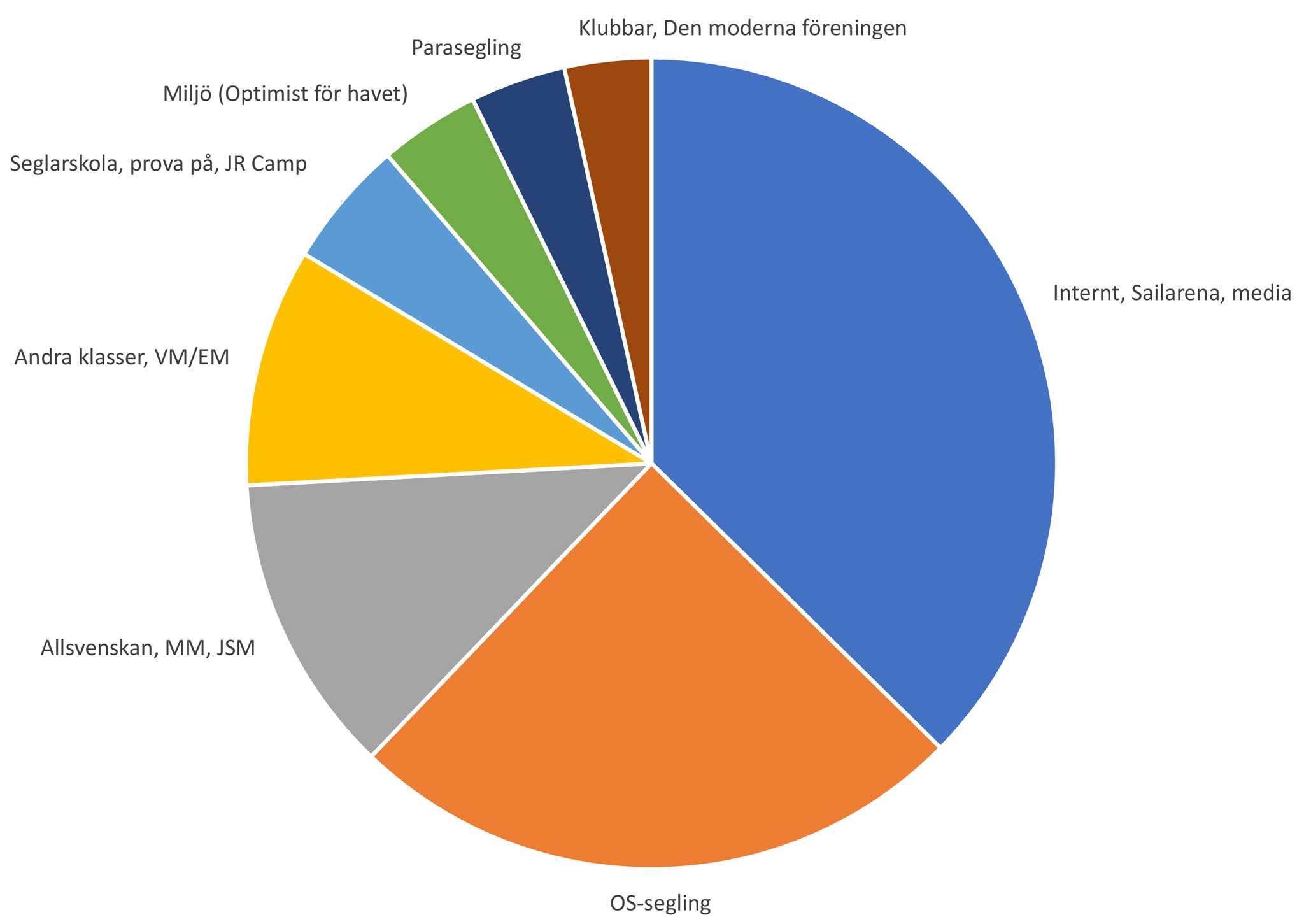
Så här mycket skriver man om olika saker.
Jag tycker ju är att jag är en ganska aktiv seglare. Jag kappseglar, både här hemma och internationellt, arrangerar regattor och jobbar med den kommersiella sidan av sporten. Men det finns ingenting här som är riktat mot mig. Jag förstår ju att distrikten och klubbarna är den primära målgruppen, men även de måste ju ha ett värderbjudande till sina medlemmar för att motivera avgiften till SSF?
Om man har visionen ”Svensk segling – tillgänglig för alla”, så måste man ju fråga sig vem alla är. När jag funderar på om jag ingår i målgruppen, så kan vi vara säkra på att tveksamheten är ännu större hos den nyblivna seglarfamiljen eller en tjej som just seglat sin första onsdagssegling i en IF.
SSF vill utvecklas i linje med Riksidrottsförbundets ”Strategi 2025”, och det borde så klart synas i kommunikationen.
Man har ju haft Gymnastikförbundet som inspiration på Träffen, då de växer med 20% om året. Läsaer man deras beskrivning av sin verksamhet så har de en betydligt bredare ansats. Kan det kanske hänga ihop?