Rykings målgång
Stort grattis Micke!
Ryking becomes first Swede to complete the Route du Rhum
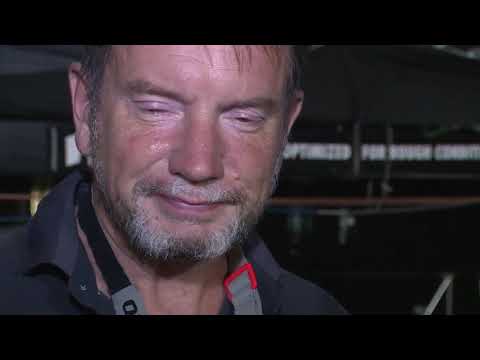
The experienced Swedish sailor Mikael Ryking set out to become the first skipper from his country to complete the Route du Rhum-Destination Guadeloupe and this morning he reached Pointe-à-Pitre to achieve his goal on board his yacht, Talanta.
The 47-year-old from Stockhom who started sailing as a boy in Optimist dinghies, finished in 21st place out of the 53 starters in the highly competitive Class40 division, completing the 3,542-nautical mile course in 22 days, 16 hours and 53 minutes.
Ryking made a poor start to the race back on November 4th off Saint Malo and in the early stages was running in 37th position. He then went north of the Traffic Separation Scheme off Ushant and continued out to the west, a decision which saw him overtake 15 boats to establish himself in the middle of the fleet by the end of day three.
From there he sailed an impressive race. Holding position through the early storms and he kept his race on track despite a broken autopilot and some sail damage. In the final stages he was in a group of four boats led by Louis Duc who finished 19th on Carac, then Rodolphe Sepho who was 20th on Rêve de Large, then Ryking and then Franz Bouvet on Yoda in 22nd spot.
Ryking was in good spirits as he docked in Guadeloupe, even if he was never in contention for the podium in an eight-year-old boat. “Well, you can only be pleased if you win,” he said when asked if he was happy with his fleet position. “But this is not the most competitive boat…but I am very happy with this position and I am very happy to be here. Guadeloupe is my favourite Caribbean island. I spent a lot of time here, so I am really looking forward to visiting my favourite places in the forests and on the beaches.”
He reflected on the very tough opening phase of the race which saw many skippers either retire with damage or seek shelter in ports on the French and Spanish coasts. “It started off with very, very rough conditions with a lot of wind and many fronts,” he said. “I think I lost track of how many fronts I went through – it was like five or six. But I did not have any big damage. I had a big tear in one of the sails and then I broke my medium spinnaker three days ago but, in general, things are still working although I had to do a lot of repairs along the way.”
One issue Ryking had to deal with was his engine which he discovered had become flooded with sea water. Knowing that he might need it in an emergency and worried that it was going to be a write-off, he spent many hours stripping, cleaning and reassembling it before successfully testing it. “It was a fun thing to do in rough conditions,” he said laughing.
Ryking was the Swedish Offshore Sailor of the Year in 2016 following his win in the Middle Sea Race in Class40s that year and he has loved the challenge of the Route Du Rhum-Destination Guadeloupe and says he would like to have another go at it in the future.
“Yeah for sure,” he said when asked if he would do it again. “This is the race – I really enjoyed it – it is a very good challenge because it is not just about racing but also about getting here. It is sad that so many skippers had to abandone or capsized and believe me, when you are out there with waves breaking over the boat and you are just flying around inside…you know what it was like (for the others).”