Jean Baptiste came on deck this morning and said to us “fast, but not furious”, and that’s been our mantra. Despite doing outstanding speeds the last 2 days we have not been furious, always been in control..The conditions have just been great with small seas and winds of 25-30 knots..we have been changing between the solent and small gennaker, and between one and two reefs in the main..
Top speed that I did on my last watch was 43.6! That’s the fastest I will get to till the finish, as the wind will drop
slowly..it might well have been my last full on blast on this mighty machine..
However much we want to get to the finish, to accomplish the goal, to lift the stress of going this fast for so long, to see family and friends, to do other things than live in a carbon tunnel. There is part of you, a small but valid one that is sad to see it ending – could this be the best trip of a lifetime?
So am enjoying these last miles, these last hours as we blast past Ireland, the Scillies and onwards to the finish..
This afternoon has been busy, and like seeing the first jet contrails, the first fishing boats, we are experiencing the first signs of approaching civilisation, of reengagement with the land world..
At 1100 we had a satellite being guided to sit overhead to take picture, at 1300 a French navy/coastguard jet, a Falcon 50, from our boat’s home port of Lorient, came to take video..
At 1500 we will get a call from the President of France…
It’s all going on here!
ETA 2200 to midnight tonight. One last watch to go..and I think our lucky watch streak is going to continue, with having the start, finish and most of the major Capes during our time on deck..
Now with on reef and medium gennaker the wind is starting to drop a little.
We are having the most unorthodox arrival at the finish line – from the North. We almost certainly have now gone the furthest North (52N) and furthest South (62S) of any Jules Verne attempt..
Hur ser skrov och rigg ut på en kölbåt som fri från regler är optimerad enbart för kryss? Vad gör att en båt kryssar högt och fort (förutom längd på mast och skrov)? Vilken båt brukar vara först till kryssmärket?
Jag hade det stora nöjet att få fira nyår i Sydney. Jag hade inte förstått att det var en så stor grej förrän jag landade och insåg att många hade kommit hit enbart för det här. Stora reportage i tidningar och på TV, och speciella guider för var man kunde hålla till. Och när 1.5 miljoner skall spana in fyrverkeri, så krävs det lite planering.
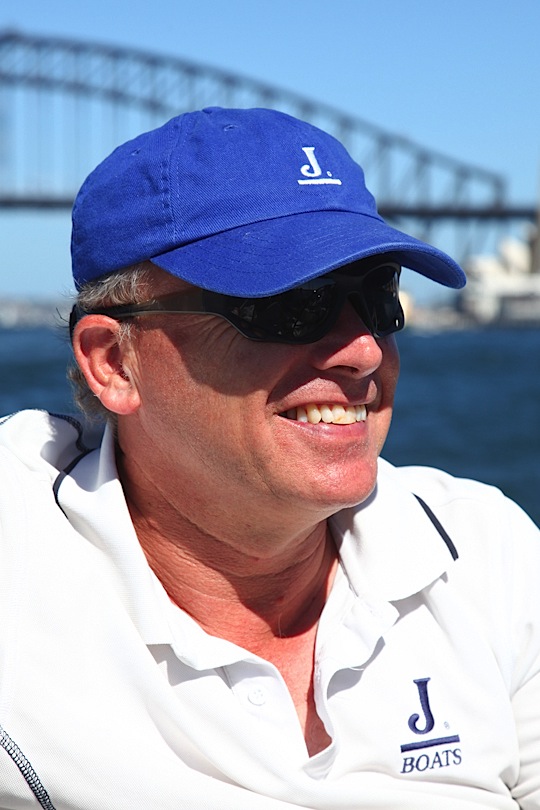
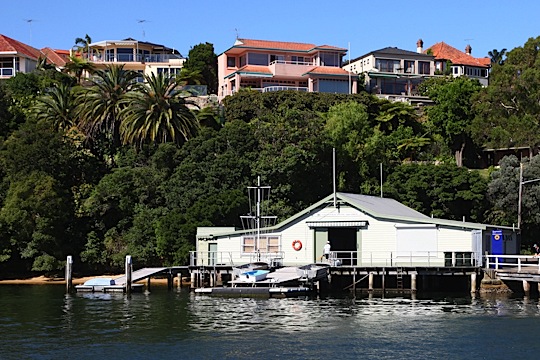
Själva var vi bjudna på nyårsfirande med ett antal andra J/boats-seglare på helmysiga Greenwich Flying Squadron strax nordväst om stan.
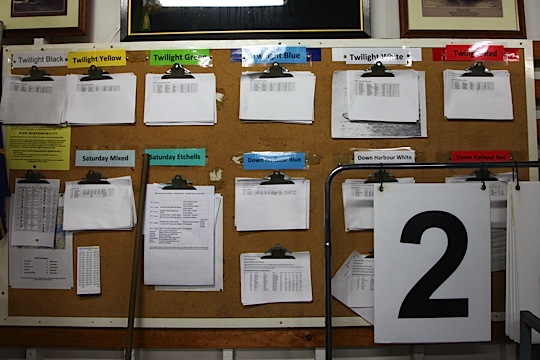
Trots det lilla gröna skjulet till klubbhus, så samlade man 40-50 båtar på kvällsseglingarna runt öarna inne i Sydneys hamn.
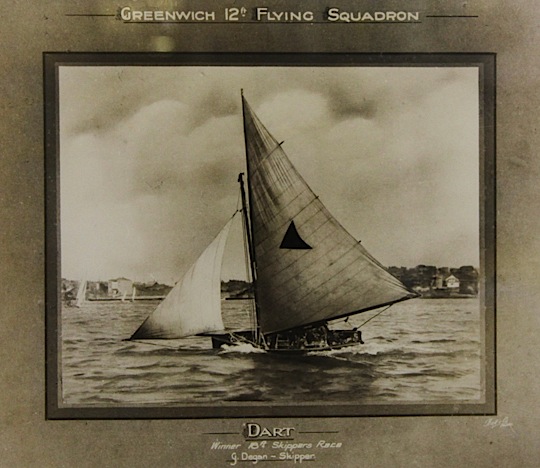
Klubben är väl mest känd för sina skiffseglare, både gamla 12-fotare och senare även 18-fotare när det var en stor serie.
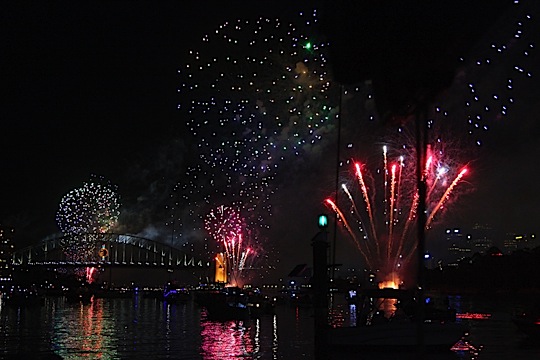
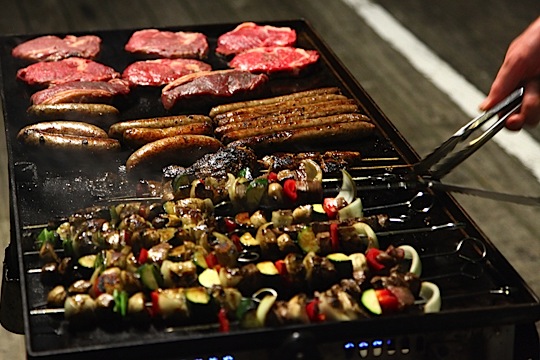
Nyårsmiddag “aussie style”. Det blir inte mer casual än flip-flops, BBQ och pingis i klubbhuset på nyårsafton. Sedan åkte vi allihop ut i en J/122 för att spana in fyrverkerierna (fler bilder nedan).
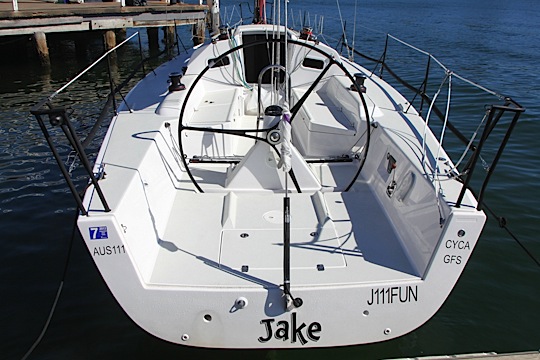
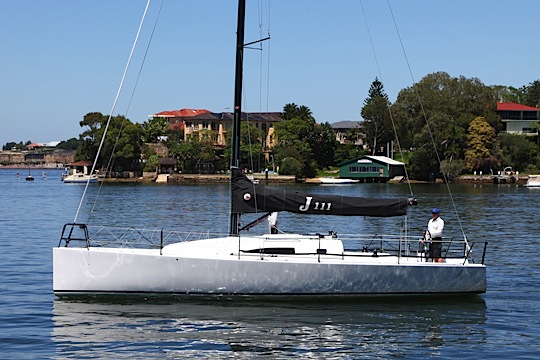
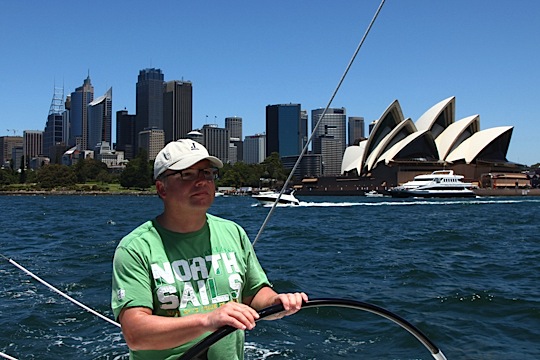
Trötta seglare på nyårsdagen. Vad finns det för bättre sysselsättning än att ta en J/111 och segla ut i havet och vända och sedan ner till Cruising Yacht Club of Australia (CYCA) för en pilsner?
Det här skulle man kunna vänja sig vid. Både båten och Sydney hamn som hemmavatten…
Det var ju andra gången jag seglade J/111 (den första var i Kappeln i november). Nu blåste det kanske 8-10 m/s och vi körde full stor och #3 då man trodde det skulle öka. På slätt vatten blev jag ännu mer imponerad av kryssegenskaperna, och jag hade inga problem att hålla 7.2 knop. Lätt på ratten, men precis som på J/109 så krävs det att man jobbar med storskotet. Utför så rinner den så klart på och all kraft i puffarna blir till fart.
I Sydney har man blivit tvåa i Offshore Series. Man hamnar i IRC Division 1 tillsammans med First 40, Cookson 12, DK 43, Corby 49, TP-52, Ker 40, Sydney 43, Swan 60 och andra stora båtar. Inte illa för att vara första säsongen.
Dags för en pilsner på Cruising Yacht Club of Australia, som ju arrangerar Sydney Hobart.
Stort tack till Ray Entwistle, ägare av J/111 Jake och J/boats återförsäljare i Australien och Nya Zealand.
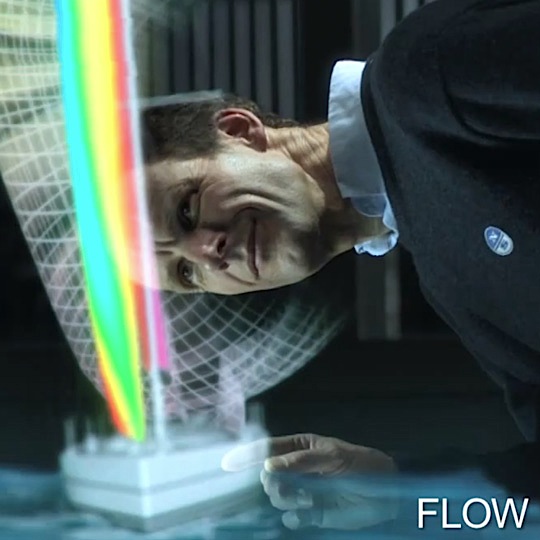
When North Sails released their video on design, starring Michael Richelsen above, I thought it was a bit over the top. But then again, it’s hard to explain how much time, effort and money that goes in to all those tools.
Being both an avid sailor and an engineer (M.Sc. Computer Science) I want to dig deeper to really understand what’s going on. When North introduced 3Di, I went to Nevada to try to explain why this could be the biggest thing in sailmaking since 3DL. Al major websites republished the article and it even ended up on Norths owns sites as “3Di Explained”.
With the big projects like America’s Cup, Volvo Ocean Race and MedCup, sailmaking have gone from being an art to much more of a science. And if there’s one person who really understands this development it’s Michael Richelsen, the man behind much of the North Sails Design Suite (NDS).
Michael studied mechanical engineering at the Technical University of Denmark, and wrote his master thesis on sails and aerodynamics, before joining North Sails in 1979. He’s one of the leading experts on CFD (Computational Fluid Dynamics) and he’s been involved in America’s Cup projects since 1983 and he managed the performance prediction group for Alinghi in the last Cup:
What makes this boat so different to, say, a keelboat is that windage is much, much bigger. Windage goes up by speed squared, so when you think that this boat is capable of travelling three or four times faster than a Version 5 boat, you can see the importance of windage. With the keelboats, wave drag was the biggest element of drag, where at a certain speed the boat ran into this wall of resistance. There is no such wall with this kind of boat; that aspect is not there. Aerodynamic drag is a much greater factor, and you could say that what’s going on above the water is much more important than what’s going on below the water this time.
North Design Suite. There’s many pieces to a complex puzzle. We all know how everything interact in the real world, and it doesn’t become any easier trying to do it in software.
What’s happening right now?
Following Alinghi loosing the AC33 I returned to my full time job at North Sails. Having been on reduced time for quite a while, the North designers had accumulated a fairly long wish list of desired upgrades to the North design suite of software. The development of the software falls in my department – fortunately we now have a couple of great guys helping out on this. High on the list was accurate dynamic modeling, i.e. upgrade the current static coupling between Flow and MemBrain to account for external variations in time due to wind and/or sea state. Collectively we decided to attack this first, but part way through the development the wing for the next AC34 entered the scene.
We decided to shelf the dynamic work for the time being and instead focus on adding a wing model to Flow and MemBrain. Early on in this phase, North Technology Group, was contracted by ACRM to design the AC34 wing offered in their Shared Design Package.
So the wing development combined with joining our small ACRM/SDP team has kept me busy!
What’s you sailing background?
I started sailing with my dad and then joined the junior program in a local sailing club. Grew up in the classic “juniorbåd” followed by Yngling, then started sailing Trapeze dinghy and 470. Also sailed in various Danish and Scandinavian one design keel boats, after I finished school and began my studies.
How did you end up at North Sails and in CFD?
I studied Solid Mechanics at the Technical University in Denmark with an emphasis on applied mathematics, including Fluid Mechanics. For my M.Sc. I chose to create an aero-elastic model for a sail. As I did not have access to aerodynamic data, I wrote to North Sails San Diego (back then the Mecca of North) to inquire whether they would be interested in collaborating for my thesis work. Lowell North invited me to come to San Diego and then go down to NZ to work with Tom Schnackenburg for half a year, who became a kind of mentor for me. That was the beginning of it.
I went back to Denmark to finish my M.Sc. Following that in order to continue my work with North, the company offered to sponsor my Ph.D. on further aero-elastic development. Our structural MemBrain model originates in this work.




 Dags för en pilsner på Cruising Yacht Club of Australia, som ju arrangerar Sydney Hobart.